




Mehsana-Delhi milk transit time drops to 7 hrs with Vadodara's dedicated freight corrior
Updated: Jun 22nd, 2026


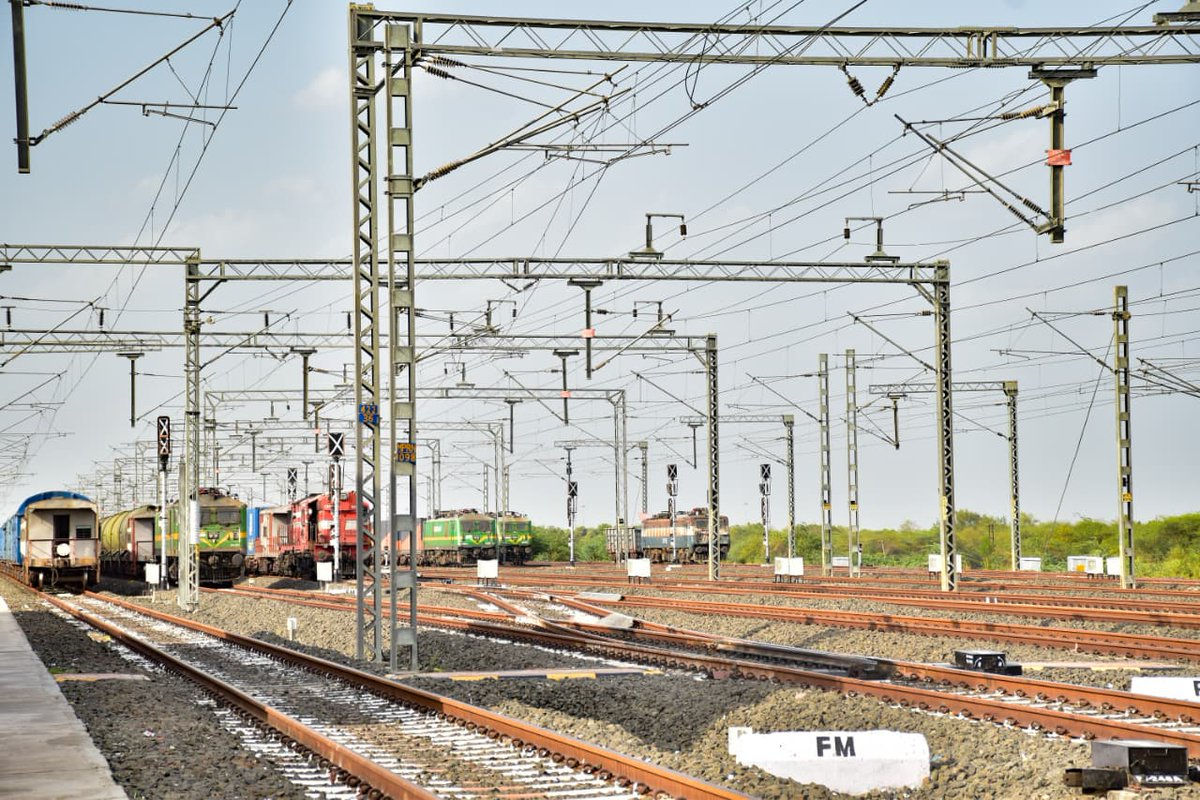
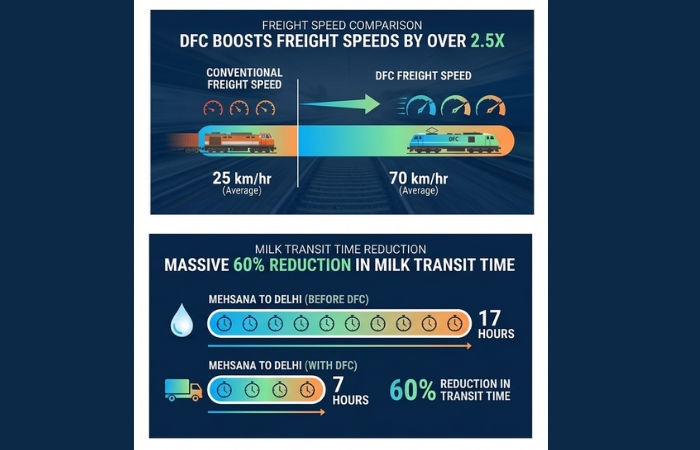
The Dedicated Freight Corridor (DFC) at Varnama in Vadodara has emerged as a major catalyst for trade and industry, transforming Central Gujarat into a logistics powerhouse. Spanning 30 villages in Vadodara district, the infrastructure project has significantly improved cargo movement by increasing average freight train speeds from 25 kmph to 70 kmph.
One of the most notable outcomes of this enhanced efficiency is the Mehsana-to-Delhi milk transit route, where transportation time has been reduced from 17 hours to just 7 hours, marking a 60% reduction. The corridor has also strengthened connectivity to Mumbai and major Gujarat ports, including Mundra, Pipavav and Kandla, providing a significant advantage to exporters.
At present, between 50 and 70 goods trains operate daily on the Vadodara-Mumbai section of the corridor. However, plans are underway to shift all freight traffic to the dedicated track within the next two to three months. Once implemented, the number of freight trains is expected to increase to between 110 and 140 per day, effectively doubling the railway's carrying capacity.
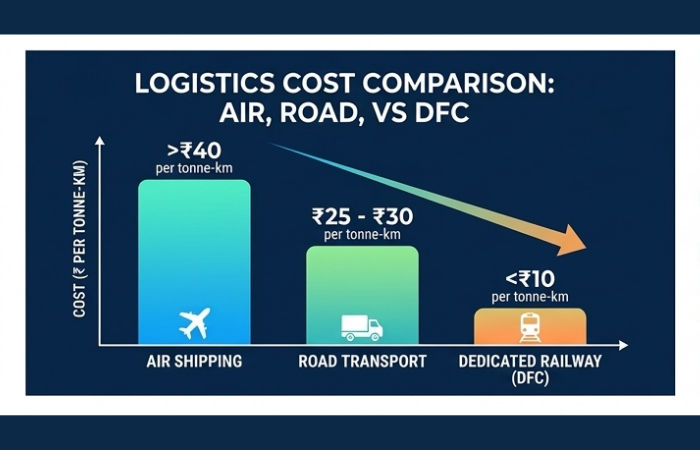
The dedicated rail network also offers substantial cost advantages. While air transport costs more than ₹40 per tonne-kilometre and road transport ranges between ₹25 and ₹30 per tonne-kilometre, freight movement on the corridor costs less than ₹10 per tonne-kilometre.
The reduction in logistics costs is expected to lower the retail prices of essential commodities by ₹6 to ₹10 per tonne, providing financial relief to consumers.
The planned diversion of freight traffic to the corridor will also free conventional railway tracks from cargo operations, creating scope for additional passenger trains and higher operating speeds. In addition, the shift is expected to deliver environmental benefits through reduced carbon emissions from road-based freight transport.
