




Iran-Israel war affects Gujarat kitchens, thali becomes 20% costlier, hotels cut down menu
Updated: Mar 22nd, 2026


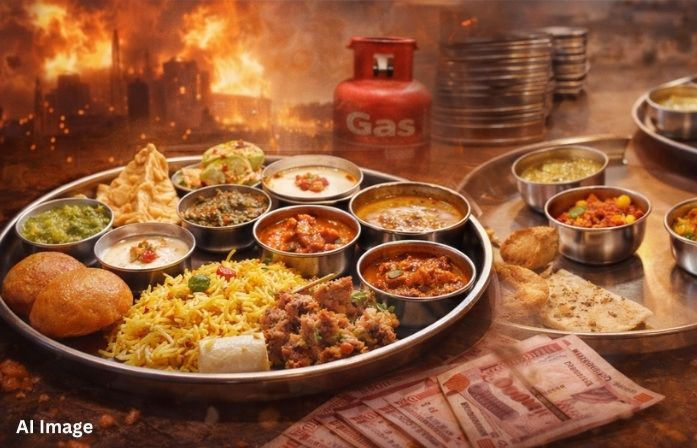
As the Iran-Israel conflict shows no signs of ending, its impact is now being felt in both household kitchens and restaurants, with the cost of a traditional Gujarati thali rising significantly. Dining out for a Gujarati thali is a common tradition during festivals and special occasions, but the ongoing LPG shortage has led to an estimated 20% increase in prices, now being implemented by several hotels and restaurants.
According to a March 2026 Bloomberg report, the war and the blockade of the Strait of Hormuz have caused shortages of oil and LPG in India. This has directly increased the cost of preparing a Gujarati thali, which typically includes roti, dal, two to three vegetable dishes, rice, ghee, papad, pickle, buttermilk, kadhi, and farsan all of which rely heavily on LPG and edible oil.
Crude oil prices have risen from $100 per barrel to around $105, marking an increase of over 40% since the conflict began. India imports nearly 80% of its crude oil and about three-fourths of its LPG through the Hormuz route. The supply disruption has also pushed up edible oil prices and transportation costs.
Domestic LPG prices have seen a 7% increase, with a standard 14.2 kg cylinder now costing around ₹913. Commercial LPG cylinders, typically priced at ₹1,900, are reportedly being sold at two to three times that rate in the black market.
The rise in LPG prices has increased household cooking expenses by ₹20–30 per meal. Additionally, higher transportation and edible oil costs have made a single thali 8–12% more expensive overall, directly impacting everyday meals like dal, rice, vegetables, and roti.
According to restaurant associations, nearly 80% of restaurants depend on LPG as their primary energy source. Due to the shortage of commercial LPG, many establishments have had to adopt “crisis menus,” raising thali prices by over 10%. In Ahmedabad, most restaurants have increased prices by ₹20 to ₹50, while some have reduced menu items to manage costs.
Experts warn that fertiliser shortages could further push up prices of vegetables and grains in the long term, making Gujarati thalis even more expensive. If the conflict continues, food inflation is expected to rise further. While the government has taken steps to control domestic LPG price hikes, hotels and eateries continue to struggle with rising operational costs.
