




Inquiry ordered after businessman alleges harassment by police at Ahmedabad checkpoint
Updated: Apr 16th, 2026


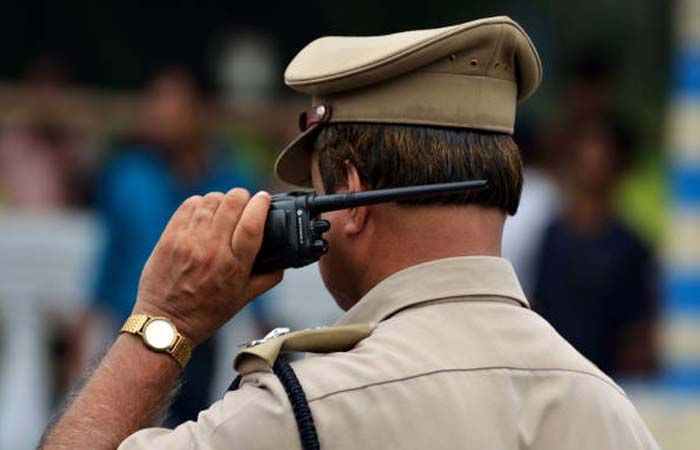 |
| Representative image |
The Ahmedabad Police has ordered an inquiry after a businessman alleged that he and his colleague were subjected to prolonged questioning and intrusive phone checks by personnel at a highway checkpoint on the outskirts of the city.
The allegations surfaced through a social media post by Pankaj Singh Parihar, a study-abroad consultant, who claimed that the incident took place while returning from his Ahmedabad office via the NE1 expressway. The post, which has garnered significant traction online, described what he termed as “harassment” despite full cooperation with authorities.
According to Parihar, their vehicle — bearing an out-of-state registration — was stopped at a routine police checkpoint, where officers conducted a detailed search, citing Gujarat’s stringent prohibition laws. “We cooperated fully. They searched every corner of our car. We had nothing to hide,” he wrote.
However, the situation escalated when officers allegedly seized their mobile phones and began examining them in detail. “It was not a cursory glance. They opened chats, read conversations, checked our gallery and even played audio messages,” Parihar stated, adding that the process continued for nearly an hour.
He further alleged that at one point, two officers sat inside the car with the doors shut, scrolling through their phones while the occupants were made to stand outside. “There is a different kind of stress when your phone, which contains your entire personal and professional life, is in someone else’s hands,” he wrote.
The complainant also claimed that when he informed the officers about his profession in overseas education consulting, they scrutinised a handwritten office diary containing expense records, including entries related to student loans and foreign exchange transactions. “They referred to it among themselves as ‘kabutarbazi’ and questioned each entry, as if attempting to build a case,” he alleged.
According to the post, the officers then allegedly threatened to take them to the cyber crime unit for further verification. “We were told we would ‘get caught’, despite knowing we had done nothing wrong,” he said, adding that they insisted on being taken to the police station if required.
Parihar claimed that the officers later drove their vehicle a short distance away from the checkpoint and repeated their questioning, suggesting an informal “settlement”. “It became clear that this was no longer routine checking,” he wrote, adding that after he firmly asked to be taken to the cyber cell, the officers allowed them to leave.
Life of a common Indian, while passing through Model State Gujarat. 👇
(post from LinkedIn) pic.twitter.com/G2IAflVl9n
— Sandeep Manudhane (@sandeep_PT) April 15, 2026
Responding to the viral post, the Ahmedabad Police acknowledged the complaint and termed the incident “extremely unfortunate”. In a statement issued on social media, the force said that an inquiry had been assigned to the Deputy Commissioner of Police, Cyber Crime, and assured that “strict action will be taken against those responsible for the harassment”.
When contacted by Gujarat Samachar Digital, Lavina Sinha, Deputy Commissioner of Police (Cyber Crime), said, “We have started an enquiry regarding the matter. It is suspected that the personnel belong to the traffic department and further action will be taken once the inquiry is completed.”
While no formal complaint has been registered so far, officials said the matter is being examined internally. The incident has triggered wider discussions on police conduct during roadside checks, particularly in the context of privacy concerns related to personal digital devices.
Gujarat enforces prohibition laws that ban the sale and consumption of alcohol, and highway checks are common, especially for vehicles entering the state. However, legal experts note that the scope of such checks — particularly access to personal mobile data without due process — remains a sensitive issue.
Further details are awaited as the inquiry progresses.
