





India’s 422 bird breeding sites, including Gujarat’s 19, deemed of int’l importance
Updated: Feb 16th, 2024


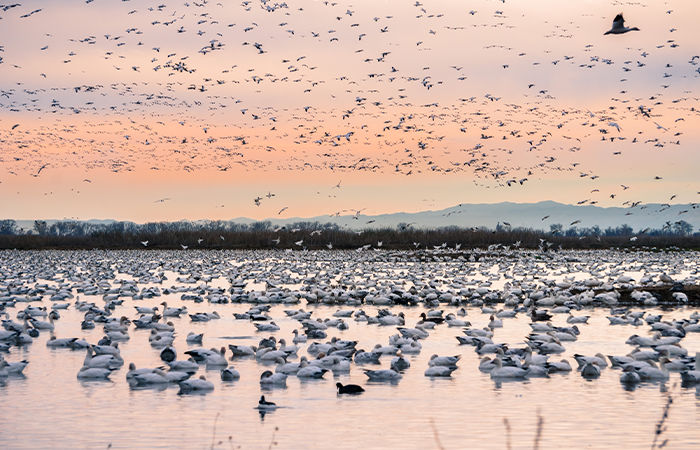 |
| Migratory Birds (img: Pexels) |
As part of the 14th Conference of Parties (CoP) that commenced in Uzbekistan’s Samarkand on Feb 11, 422 of India’s wetlands, including many situated in Gujarat, were deemed of international importance by the report, Central Asian Fly Situation Analysis, 2023.
Migratory birds in thousands travel many miles and come down to these grasslands, wetlands, and forests of India.
They use around nine such routes called ‘great flyways,’ which are a part of the Central Asian Flyways (CAFs), and land on breeding or non-breeding grounds during their journey.
There are a total of 1,717 such wetlands worldwide.
Out of the 422 wetlands in India, Assam has the most, 54, whereas Uttar Pradesh has 38, Karnataka has 33, Maharashtra and Tamil Nadu have 29 each, Arunachal Pradesh has 27, Madhya Pradesh has 19, Jammu-Kashmir has 18, Andhra Pradesh and Bihar have 14, Kerala has 9, while Odisha and Himachal Pradesh have 8 each.
Gujarat’s locations
19 of such lands are located in Gujarat. These include prominent locations such as Banni grasslands, Chhari Dhand, Flamingo City, Naliya, Bhal region, Anand, Botad, Bhavnagar, Charkala near Dwarka, Khijadiya, Marine National Park in Jamnagar, Nalsarovar, Thol, Gir National Park, Velavadar, Gosabara-Mokarsagar Porbandar, and Little Rann of Kutch.
Journey of the migratory birds
Such wetland sites are observed to be in Russia (345), Kazakhstan (127), China (125), Iran (99), Mongolia (83), Uzbekistan (51), and Turkmenistan (49).
Migratory birds in thousands of numbers visit these sites in a fixed cycle over a year. Around 605 species of birds in 84 class types, which include water birds, land birds, and sea birds, among others, are in the migrating parties.
They breed and multiply at these sites and proceed on their journey.
There is a gradual decline observed in the population of migratory birds as the wetlands are ignored by the concerned authorities, and they remain unsafe for birds because of bird-hunting activities, industrialisation, and unawareness from the locals, as stated by the report.
It adds that these migratory birds indicate our overall ecological health.
According to this report, the regions these routes are passing through need to strengthen bird-breeding cognizance.