





How AI-powered surveillance will prevent stampede during Jagannath Rathyatra 2025
Updated: Jun 10th, 2025


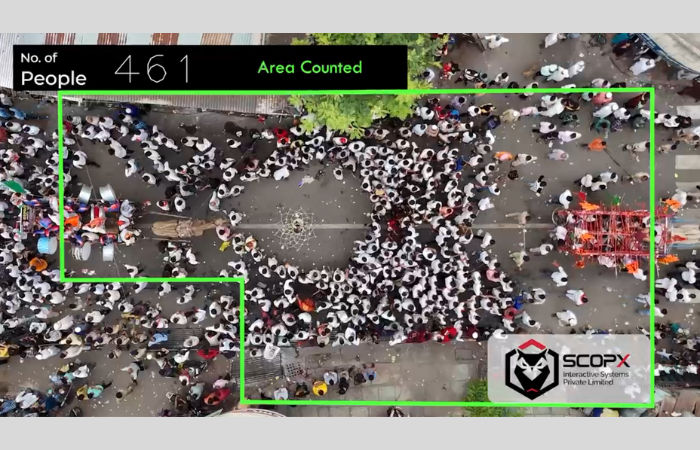
In a bid to ensure public safety during the upcoming Jagannath Rathyatra 2025, the Ahmedabad City Crime Branch has introduced advanced AI-based visual analytics systems to preempt stampede-like situations. This marks the first large-scale deployment of anti-stampede algorithms integrated with CCTV surveillance for a religious procession in the state.
This system will be installed at four major junctions where the procession will pass and where the footfall of devotees will be higher. Which will cover the Jamalpur chakla (temple area), Saraspur, Kalupur Circle and Dariyapur Darwaja.
The system, currently being tested and fine-tuned ahead of the annual event, uses real-time monitoring powered by artificial intelligence and machine learning algorithms to assess crowd density, movement patterns, and potential risk zones.
“Based on reference area mapping and continuous headcount algorithms, the system can identify dangerously dense zones and trigger alerts before a situation escalates,” said DCP Ajit Rajan of the Crime Branch.
How it works
The software analyses live CCTV feeds using pixel-based and object detection models like Mask R-CNN (Mask Region-based Convolutional Neural Network) to count individuals, detect movement surges, clustering, fallen individuals, or signs of panic in the crowd. When crowd density exceeds pre-defined thresholds, the system sends real-time alerts to control rooms and security personnel via GSM messages, LCD panels, and internal communication channels.
Some of the systems also feature predictive analytics, learning from historical and live data to forecast bottlenecks or high-risk areas along the yatra route. Advanced versions incorporate reinforcement learning to recommend optimal evacuation paths and crowd redirection strategies.
Why it matters
The Jagannath Yatra draws lakhs of devotees from across the state and beyond, with narrow streets often overwhelmed by footfall. In previous years, crowd control has relied heavily on manual surveillance and human judgment, increasing the potential for oversight.
“With these AI-driven tools, we are shifting from reactive crowd control to a proactive safety model,” said an official from the technical team. “It enhances our situational awareness and response time significantly.”
Applications and future use
Officials say the system’s utility extends beyond religious events and may soon be adapted for use at railway stations, stadiums, political rallies, and tourist sites. It could also support planning and security during festivals like Navratri, Diwali markets, and the International Kite Festival.
Challenges and considerations
Despite the benefits, authorities acknowledge limitations. Changes in lighting, camera angles, and crowd occlusion may affect accuracy. There are also ethical concerns around data privacy, facial recognition, and AI surveillance in public spaces.
Integration with older CCTV infrastructure remains a logistical challenge, and officials stress that human vigilance will continue to play a vital role. “AI is a tool, not a replacement. Human intervention remains essential for on-ground coordination and emergency response,” said a senior officer.
As preparations intensify for the Rath Yatra, the Crime Branch is conducting regular simulations and crowd mapping exercises using these systems. The data collected this year is expected to inform long-term strategies for safer public gatherings across Gujarat.