





Gujarat’s water storage jumps to 46% amid heavy rainfall
Updated: Jun 29th, 2025


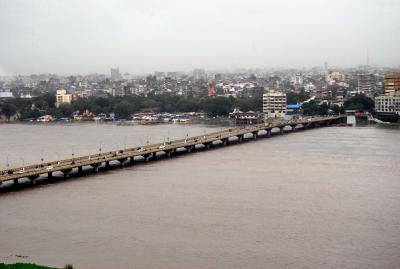
The monsoon has swept into Gujarat with full force, improving the state’s water reserves and breaking a decade-long rainfall record in Ahmedabad. As of now, the average water level across Gujarat’s 206 reservoirs has risen to 46.21%, compared to 38.24% on the same date last year.
Thirteen reservoirs in the state are already 100% full, while 18 have been placed on high alert due to continuous inflows.
Saurashtra leads with 10 reservoirs at full capacity, followed by one each in Central Gujarat, South Gujarat, and Kutch. The Sardar Sarovar Narmada Dam -- Gujarat’s lifeline -- has witnessed a significant inflow of water from upstream Madhya Pradesh, recording 54,032 cusecs. The current water level stands at 118.08 m, with a maximum capacity of 138.68 m.
This has enabled the operation of two key hydropower units, CHPH-1 and RBPH-4, generating crores in revenue for the state. Additionally, 12,200 cusecs of water are being released into the dam’s main canal to support irrigation and the drinking water supply.
The current storage in Sardar Sarovar is 16.4650 million cubic m, roughly 49.28% of its full capacity.
Among the reservoirs that are at 100 per cent capacity are: Dhatarwadi-Surjawadi (Amreli), Rojki-Bogad (Bhavnagar), Goma-Bhimad (Botad), Kali (Dahod), Vagodia (Jamnagar), Kalaghogha (Kutch), Vansal-Lim, Bhogavo, Subri (Surendranagar) and Doswada (Tapi).
Across the state, 31 reservoirs are between 70% to 100% full, 35 are at 50% to 70%, while 59 are between 25% to 50%.
However, 68 reservoirs remain under 25% capacity, highlighting the need for continued rainfall in certain regions.
Ahmedabad has recorded its highest June rainfall in over a decade. The district has already received 25% of its seasonal rainfall -- a huge leap from just 4.74% by the same date last year. The city itself has received an average of 8 inches, or 27% of its annual monsoon average of 32 inches (based on 1995-2024 data).
A week ago, Ahmedabad had received just 16% of its seasonal quota. That figure has now jumped by 10 per cent in just seven days. Last year, by this time, the city had seen only 5% of its expected monsoon rainfall, making this year’s surge five times higher.
Among the district’s talukas, Dhandhuka leads with 10.92 inches of rain, or 37% of its seasonal total. Dholka and Dholera follow with over 30% rainfall -- 8.62 and 8.18 inches respectively, Sanand trails with the lowest at 13.21%.
(This story was taken from a syndicated feed and was only edited for style by Gujarat Samachar Digital team)