





Gujarat’s remote town of Dahod keeps this ancient livestock trading tradition alive
Updated: Nov 3rd, 2025


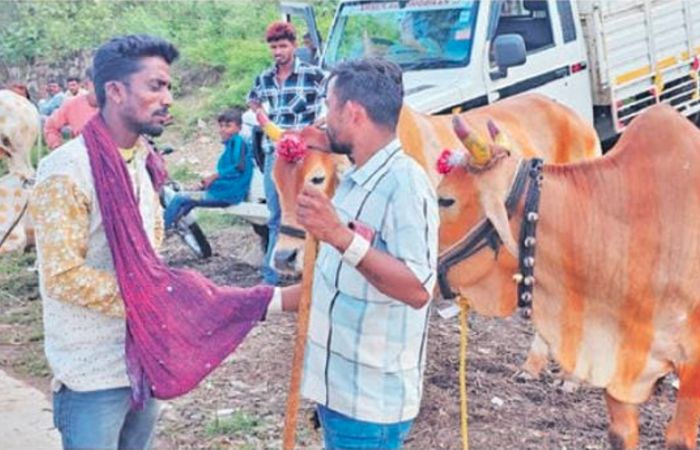
Gujarat has preserved many unique traditions in its remote areas. A small town — Garbada — is home to age-old traditions of domestic animal trading.
Located along the Madhya Pradesh border in Gujarat’s Dahod district, Garbada taluka hosts a bustling Sunday haat bazaar (weekly market).
Among its many attractions is a large livestock market that draws traders and farmers from both Gujarat and Madhya Pradesh.
Here, the buying and selling of poultry and goats take place openly. But when it comes to cattle — cows, buffaloes, bulls, and calves — the business follows a much older, more secretive tradition.
Deals are brokered by middlemen known as 'koydiyas', who act as negotiators between buyers and sellers.
First, the koydiyas agree on a price with both parties. Then comes the most fascinating part: the deal is sealed through a tradition in codewords.
The two brokers clasp hands, cover them with a handkerchief, and communicate through a series of coded finger movements — a silent language understood only by them.
The prices are supposedly determined by pulling or twisting of the fingers where only the parties involved know the ‘code’ language.
This centuries-old practice ensures privacy and trust, even in high-value transactions.
Payments are made only after verifying the animal’s qualities — whether a cow gives milk properly or a bull works efficiently in the field.
Until that assurance is given, the responsibility rests with the koydiya.
In an era of digital payments and online marketplaces, Garbada’s haat bazaar stands as a living museum of tradition — where lakhs of rupees still change hands through a handshake and a whisper.