




Gujarat’s ‘Nari Shakti’ narrative faces scrutiny amid rise in domestic violence cases
Updated: May 27th, 2026


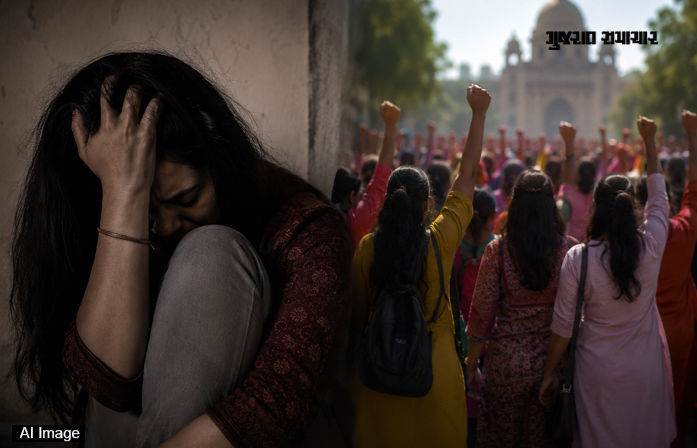
Even as the Gujarat government continues projecting the state as a model of women’s empowerment through large-scale campaigns, public programmes and repeated invocations of “Nari Shakti”, official figures and support system data point toward a troubling trend within households across the state. Rising complaints related to domestic violence, dowry harassment and family abuse are raising questions about the gap between public narratives on women’s safety and realities on the ground.
The data suggests that, despite legal safeguards and awareness initiatives, thousands of women in Gujarat continue to face violence and harassment within domestic spaces.
Dowry-related violence continues to raise concern
Dowry-linked abuse continues to remain a significant issue despite existing legal provisions aimed at curbing the practice.
Available figures indicate that nearly 125 women were allegedly driven to death due to dowry harassment in recent years, while National Crime Records Bureau (NCRB) data shows that 16 young women died in dowry-related cases during 2024 alone.
The figures suggest that dowry continues to operate as a deeply embedded social practice with serious consequences for women. Reported cases often involve physical assault, mental harassment, economic pressure and repeated demands made by husbands or in-laws.
Cases registered under cruelty by husband and relatives have also remained substantial, with nearly 1,926 such cases officially recorded during the period.
Domestic violence complaints remain high
While Gujarat is often presented as one of the country’s rapidly developing and comparatively safer states, figures related to domestic disputes indicate persistent challenges.
In 2025 alone, more than 67,000 women reportedly approached authorities or support systems regarding domestic violence and family abuse issues.
Under the Protection of Women from Domestic Violence Act, 2005, offences extend beyond physical violence and include verbal abuse, emotional harassment and economic exploitation. However, activists and legal experts have repeatedly argued that delayed action and weak implementation mechanisms continue to limit the law’s effectiveness.
Crime against women records upward trend
Crime statistics also point toward a broader rise in offences involving women.
Cases of crimes against women reportedly increased by 33% in 2024 compared with 2023, with the trend continuing into 2025 as well. The rise has prompted concerns over enforcement mechanisms and the effectiveness of deterrence measures.
Data also shows that around 489 women were allegedly abducted in Gujarat in 2025 for marriage and other motives.
The numbers indicate that violence and coercion affecting women continue to emerge across multiple categories, extending beyond domestic spaces.
Ahmedabad records thousands of family-related disputes
Ahmedabad, which has frequently been promoted as a smart city and major urban centre, has also seen a significant number of family-related complaints.
Between 2024 and the early months of 2026, family courts in the city reportedly registered more than 10,000 cases linked to maintenance disputes and domestic violence.
The figures indicate that urban development and infrastructure growth have not necessarily translated into changes in social attitudes or reductions in gender-based violence within households.
Helpline data reflects scale of distress
The Gujarat government has often highlighted the “181 Abhayam” women’s helpline as evidence of institutional support for women facing distress.
However, figures from the helpline itself also underline the extent of the problem. In 2025, the service reportedly received more than 1.68 lakh calls, with nearly 40% directly related to domestic violence complaints.
While emergency support systems remain an important intervention mechanism, the volume of complaints reflects the scale at which women continue to seek assistance for violence and abuse within homes.
Debate grows over image and reality
Even as campaigns and public programmes centred on women’s empowerment continue to feature prominently in political discourse, critics have argued that structural issues including dowry-related violence, domestic abuse and gender-based discrimination require stronger institutional focus.
The contrast between public messaging around “Nari Shakti” and data emerging from crime records, helpline services and legal systems is increasingly drawing attention to the challenges that continue to persist behind closed doors.
