




Gujarat to conduct 16th Asiatic lion census in May 2025
Updated: Apr 21st, 2025


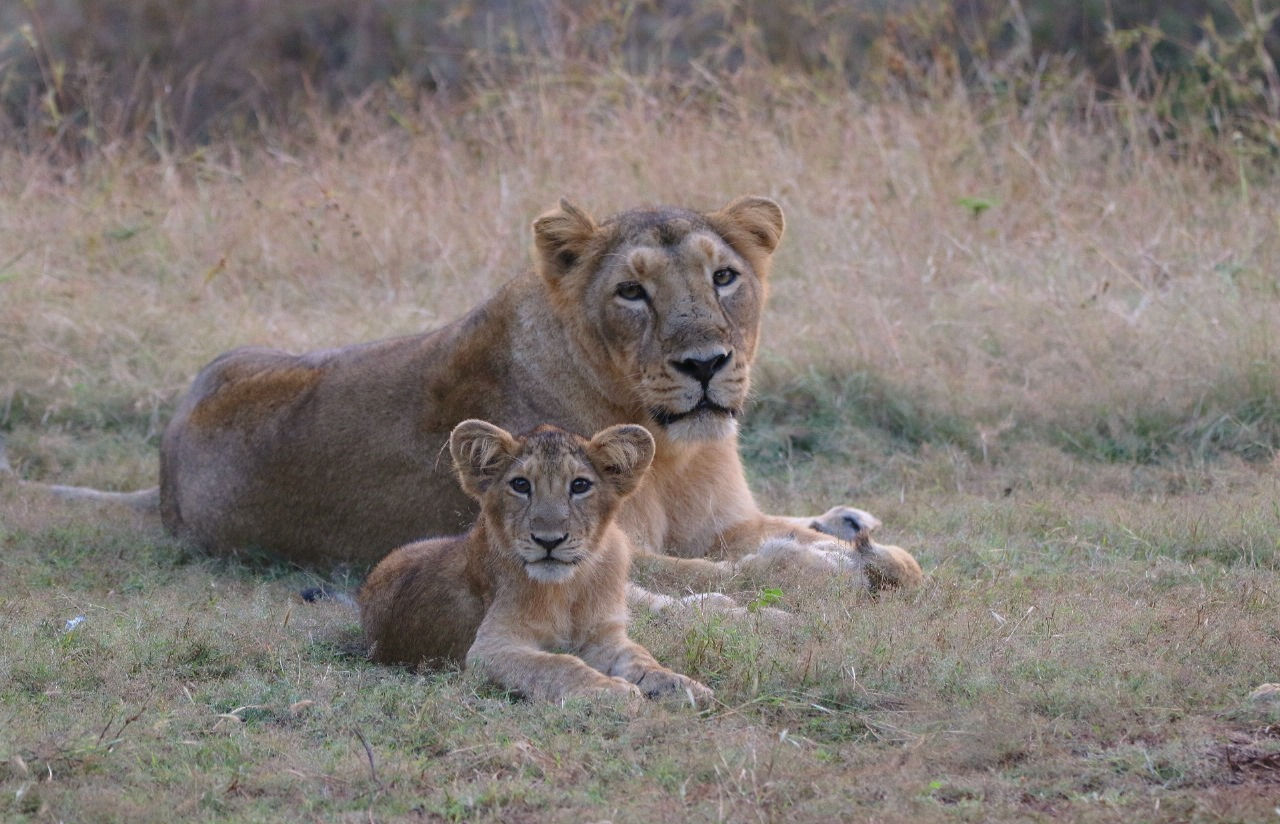
The Gujarat Forest Department is set to conduct the 16th Asiatic lion population estimation from May 10 to 13, 2025, across 11 districts covering approximately 35,000 square kilometres. The large-scale operation will be carried out in two phases using the Direct Beat Verification (DBV) method, known for its accuracy and effectiveness in wildlife censusing.
The first phase of the estimation will be held on May 10 and 11, followed by the final phase on May 12 and 13. The census will include 58 talukas where lions are known to roam, involving around 3,000 trained personnel, including regional, zonal, and sub-zonal officers, enumerators, and volunteers.
According to forest officials, the estimation will collect detailed information such as lion movements, sex, age, identification marks, GPS locations, and group composition. Enumerators will be provided with standard data sheets and maps for accurate recording.
The Asiatic lion (Panthera leo persica), often referred to by local names such as Savaj, Kesari, and Babbar Sher, is found exclusively in the Gir forest and surrounding areas of Saurashtra, Gujarat. Gujarat remains the only natural habitat of the Asiatic lion in the world.
Use of modern technology
This year’s census will incorporate advanced technologies to enhance accuracy and efficiency. These include:
High-resolution cameras
Camera traps
Radio collars for real-time tracking
The e-GujForest mobile app for on-site GPS-based data entry
GIS software to create detailed habitat and movement maps
These tools are expected to improve both precision and field data collection, marking a significant step in tech-enabled wildlife conservation.
Since the first lion census in 1936, Gujarat has carried out the population estimation every five years. Official figures have shown consistent growth:
1995: 304 lions
2001: 327 lions
2005: 359 lions
2010: 411 lions
2015: 523 lions
2020: 674 lions
Officials attribute this success to continuous efforts by the state government, including eco-development committees, wildlife education camps, local community participation, and improved habitat management.
To reduce dependency on Gir as the sole habitat, the state has initiated the development of Barda Wildlife Sanctuary as an alternative lion habitat, starting from last year.
National Symbol of Pride
The Asiatic lion is not only Gujarat’s pride but a symbol of India’s rich wildlife heritage. The lion is prominently featured in the “Make in India” campaign logo, symbolising strength and leadership.
Under the leadership of Chief Minister Bhupendra Patel, and guidance from Forest Minister Mulu Bera and State Minister Mukesh Patel, the Forest Department has intensified its conservation and habitat expansion efforts.
Direct beat verification method
The Direct Beat Verification (DBV) technique has been in use for over three decades. It provides nearly 100% accuracy and eliminates most common statistical errors. The method is particularly effective in diverse terrains such as forests, grasslands, coastal areas, and revenue lands.
During the census, the entire landscape is divided into hierarchical units, regions, zones, and sub-zones and each team records field observations in a systematic format including lion sightings, direction of movement, age, sex, and group dynamics.
Historical origins of the Asiatic lion
The origins of the Asiatic lion trace back to the Ice Age, with early populations migrating from Central Europe toward Asia and Africa. Genetic studies indicate that African and Asiatic lions split between 55,000 to 100,000 years ago.
Archaeological evidence from the Indus Valley Civilisation suggests the lion may have been present in the Indian subcontinent as far back as 3 million years ago. During the Buddhist era (~600 BCE), lions roamed extensively across the Indo-Gangetic plains, from Sindh to Bengal, the Himalayan foothills, and south to the Narmada River.
Though the exact timeline of their arrival in Saurashtra remains uncertain, historical accounts and geographic changes hint that lions entered the region via coastal estuarine routes, with one of the earliest records dating back to Chandragupta II, who featured lion hunting scenes on gold coins to mark his conquest of Kathiawar.
