

Only 27% Women Received PM Maternity Benefit Funds in Gujarat, 56% Missed Hot Meals Under Nutrition Scheme

Summarized by AI; it may make mistakes. Check important info
Summarized by AI; it may make mistakes. Check important info

Only 27.4% of women surveyed reported receiving money under the Pradhan Mantri Matru Vandana Yojana (PMMVY), while 77.2% reported out-of-pocket expenses during childbirth, according to a study conducted by the Anna Suraksha Adhikar Abhiyan across nine districts of Gujarat.
Conducted in June and July 2026, the study covered 369 women across 15 blocks in Dahod, Panchmahal, Sabarkantha, Banaskantha, Morbi, Bhavnagar, Vadodara, Surendranagar, and Patan, and examined women’s access to maternity benefits, financial assistance and nutrition services.
The initiative involved civil society organisations, including ANANDI, SAHAJ, Mahila Swaraj Manch, Janpath, Maliya Mahila Shakti Sangathan, Devgadh Mahila Sangathan and Panam Mahila Sangathan.
Of the 369 women surveyed, 101 reported receiving money under PMMVY, while 247 said they had received no money. Another 20 were unsure whether they had received payments.
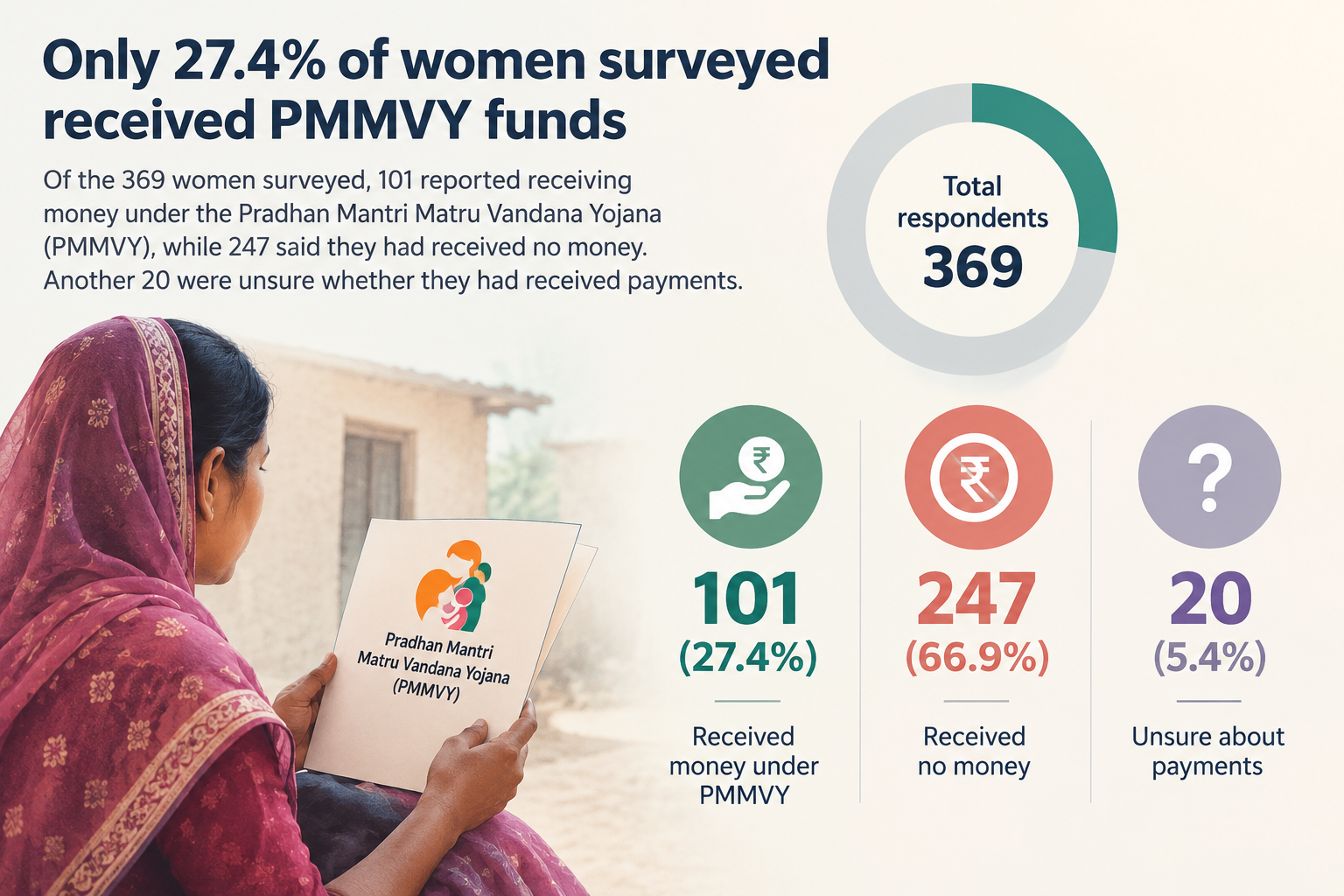
The findings highlight a gap between awareness of maternity benefit schemes and the actual receipt of financial assistance.
Childbirth expenses put pressure on household finances
The study found that 77.2% of respondents reported out-of-pocket expenditure during childbirth, with the average reported expense standing at ₹16,951.
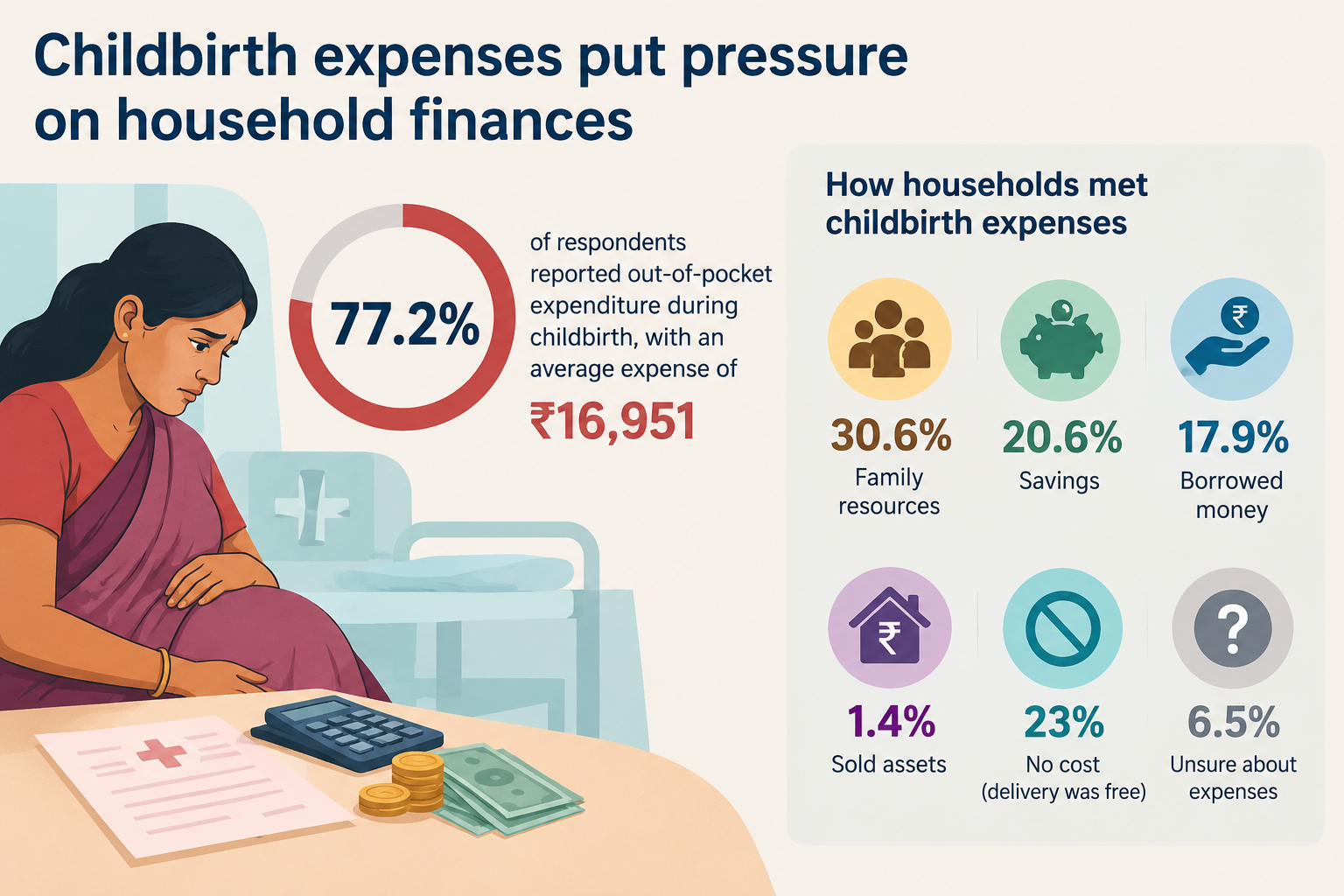
Of the 369 households surveyed, 113 (30.6%) relied on family resources to meet delivery-related expenses, while 76 (20.6%) used their savings.
Another 66 households (17.9%) reported borrowing money to cover the costs, and five (1.4%) said they had sold assets.
Meanwhile, 85 households (23%) reported that their delivery was completely free of cost, while 24 respondents were unsure about their expenses.
The findings point to the financial pressure faced by some families during pregnancy and childbirth, when women may also need additional healthcare, nutrition and rest.
Aadhaar and bank accounts do not guarantee access
Although 344 women (93.2%) had Aadhaar cards and 305 (82.7%) had their own bank accounts, the study identified barriers linked to digital access and documentation.
For 212 respondents (57.5%), Aadhaar one-time passwords (OTPs) were received on their husbands' mobile phones. Only 83 women (22.5%) received OTPs on their own numbers. A further 203 respondents reported that their bank accounts were linked to their husbands' mobile numbers.
Women also reported difficulties with Aadhaar corrections, opening bank accounts, correcting bank details, missing documents and requirements linked to the Nutrition Tracker and electronic know-your-customer (e-KYC) processes.
The study noted that access to identity documents and bank accounts did not necessarily translate into independent control over the digital systems needed to claim maternity benefits.
Awareness of schemes does not ensure payment
Of the 369 respondents, 259 (70.2%) said they had heard of PMMVY. However, only 101 reported receiving money under the scheme.
Among women who applied, 35 reported that their applications had been refused, while 19 did not know whether their applications had been rejected. The study also found limited awareness and use of grievance redressal mechanisms.
PMMVY receipt varied across the nine districts surveyed. Bhavnagar recorded the highest proportion of respondents reporting receipt at 47.2%, followed by Dahod at 35.5% and Vadodara at 34.8%. Morbi recorded the lowest proportion at 16.9%, followed by Sabarkantha at 20%.
The figures show substantial variation across the surveyed districts, although the study does not establish the reasons for these differences.
The report also found limited receipt of benefits under the state government's Namo Shree scheme. Eighteen women, reported as 4.8% of eligible applicants, said they had received benefits. Of these, six reported receiving the full entitlement.
Gaps in nutrition services
The study examined supplementary nutrition provided through Anganwadi Centres, including hot cooked meals under Poshan Sudha in four surveyed tribal districts: Dahod, Panchmahal, Sabarkantha and Banaskantha.
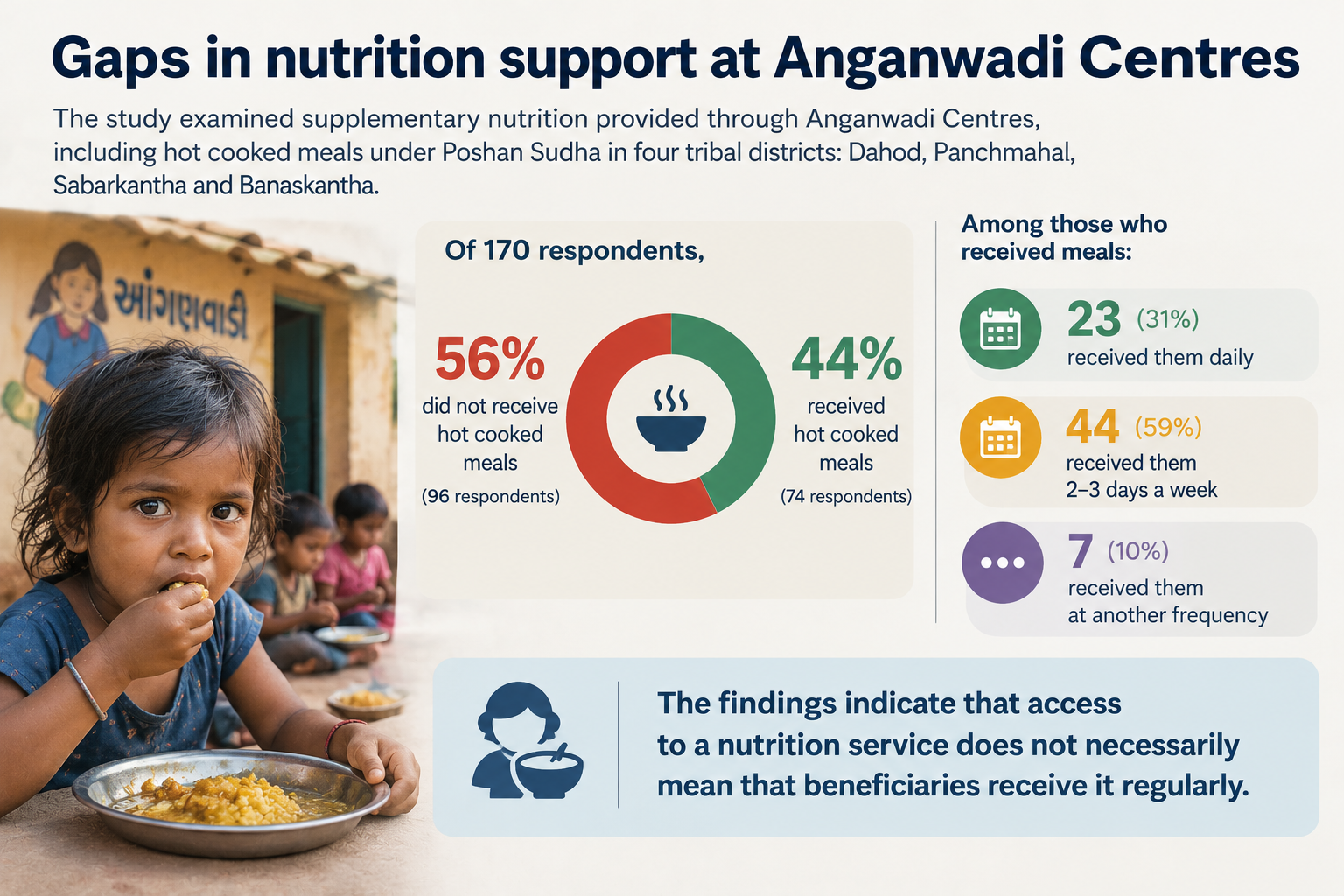
Of the 170 respondents included in the analysis of the service, 96 (approximately 56%) reported not receiving hot cooked meals, while 74 (approximately 44%) said they received them.
Among those who received meals, only 23 reported receiving them daily. Another 44 said they received meals two to three days a week, while seven reported another frequency.
The findings indicate that access to a nutrition service does not necessarily mean that beneficiaries receive it regularly.
Campaign calls for changes to maternity benefit delivery
The Anna Suraksha Adhikar Abhiyan has called for maternity entitlements to be treated as a universal legal entitlement, with adequate funding from the Union and state governments.
Its recommendations include removing age and birth-order restrictions under Namo Shree and the Mukhya Mantri Matru Shakti Yojana, ensuring timely PMMVY and Namo Shree payments, and providing alternative documentation and verification processes for women facing Aadhaar, e-KYC or bank-linkage problems.
The campaign has also called for offline application options, accessible grievance redressal mechanisms and the clearance of pending applications. It has urged authorities to ensure regular delivery of supplementary nutrition, including hot cooked meals, at Anganwadi Centres.
The study's findings suggest that the presence of maternity benefit schemes alone does not ensure that women receive financial assistance. Documentation difficulties, digital access barriers and gaps in nutrition services remain among the issues identified by the surveyed women and frontline workers.


