

Gujarat Municipalities Face Grant Cuts Over Cleanliness Lapses After Flying Squad Checks

Summarized by AI; it may make mistakes. Check important info
Summarized by AI; it may make mistakes. Check important info

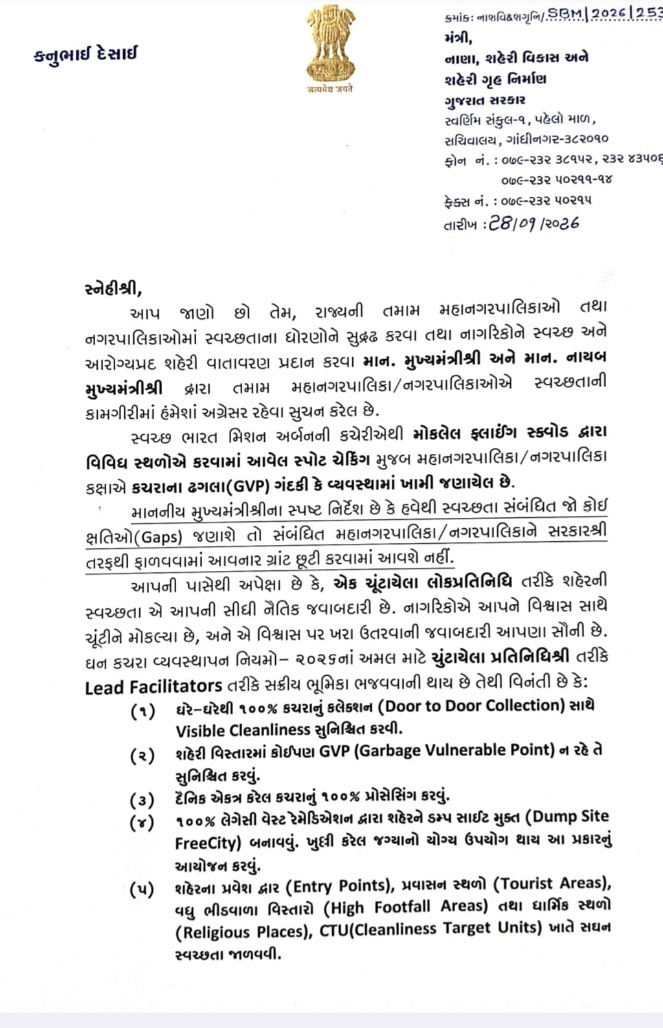
Municipal corporations and municipalities across Gujarat could face action on government grants if serious lapses in cleanliness are found during inspections, following surprise checks by the Swachh Bharat Mission-Urban flying squad.
The Finance Department has issued directions to local self-government bodies after inspections reportedly found shortcomings related to garbage disposal, Garbage Vulnerable Points (GVPs) and cleanliness at public places.
Grant Funding Linked To Cleanliness
According to the government directive, municipalities found negligent in cleanliness during flying squad inspections could have their allocated grants stopped.
The move puts greater emphasis on maintaining cleanliness standards and effective waste management across urban areas. Grants are an important source of funding for local bodies, including for civic and sanitation-related work.
100% Waste Collection And Processing Ordered
Municipalities have been directed to ensure 100% door-to-door collection of waste in urban areas and proper processing of the waste collected each day.
The government has also stressed the need to eliminate Garbage Vulnerable Points, where waste accumulates in public areas, and maintain visible cleanliness across cities.
Gujarat has previously reported extensive door-to-door waste collection infrastructure across its urban local bodies.
Legacy Waste Disposal Made A Priority
The directive also focuses on the disposal of legacy waste that has accumulated at dumping sites over the years.
Municipalities have been asked to remove the old waste and ensure proper utilisation of the land after the sites are cleared, rather than treating waste removal as the final step.
Focus On Busy And High-Traffic Areas
Special attention has been directed towards city entrances, tourist destinations, religious places and highly congested areas.
Municipal bodies will have to take zone-wise measures to prevent garbage accumulation and maintain cleanliness in areas that see heavy public movement.
Elected Representatives Asked To Conduct Field Visits
The government order also places responsibility beyond municipal commissioners and chief officers.
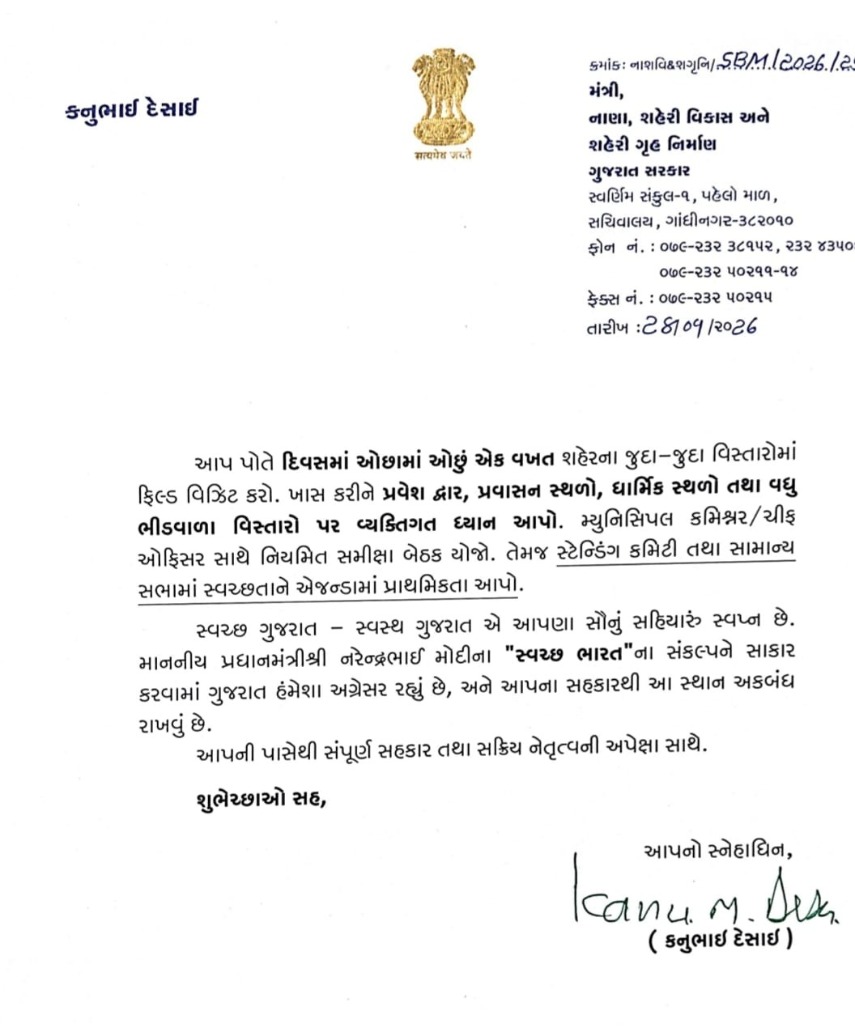
Elected representatives have been asked to act as facilitators for cleanliness initiatives and conduct field visits in their respective areas at least once a day.
Cleanliness-related issues have also been directed to receive priority during standing committee meetings, general meetings and review meetings involving municipal commissioners and chief officers.
The latest directive makes cleanliness performance a more direct concern for Gujarat’s urban local bodies, with inspections potentially affecting access to government grants.


