




Gujarat HC orders enhanced wages, payment of arrears to Anganwadi staff within six months
Updated: Aug 21st, 2025


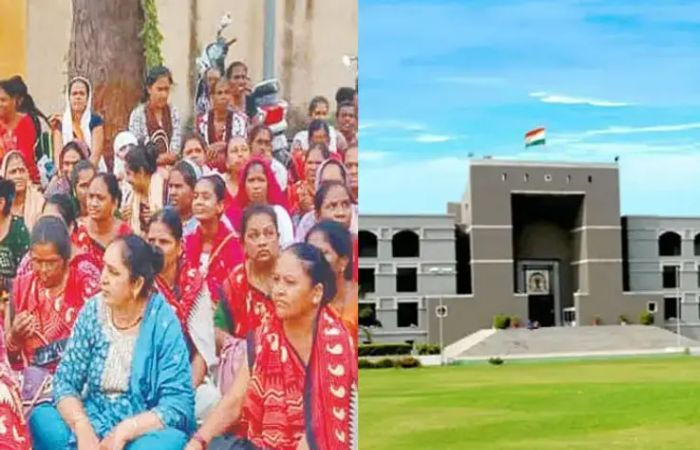
In a landmark judgment, the Gujarat High Court has directed the state government to pay all Anganwadi workers and Anganwadi helpers a significant increase in minimum wages, along with arrears. The court ordered that arrears from the financial year starting April 1, 2025, must be paid within six months.
The division bench of Justice A S Supehia and Justice R T Vachchhani ruled that Anganwadi workers should be paid a total salary of ₹24,800, while Anganwadi helpers should be paid a total salary of ₹20,300, including minimum wages.
The court also clarified that this judgment will benefit all Anganwadi workers and helpers in the state, including those who did not file petitions in the high court.
Earlier, a single-judge bench of Justice Nikhil S Kariel had, on August 2, 2024, issued an order to grant Anganwadi workers and helpers the benefits of minimum wages.
The single judge had ruled that Anganwadi workers and helpers are entitled to be made permanent government employees, and considering their job profile, they should be absorbed as permanent staff in government service with the benefits applicable to permanent employees. Justice Kariel had also directed the central and state governments to frame the necessary policy within six months to regularise their employment and provide them with benefits accordingly.
Challenging this order, the state government had filed multiple Letters Patent Appeals (LPAs). The High Court’s division bench today modified the single judge’s order and issued a crucial ruling.
Now, the benefit of arrears will be available within six months. The division bench quashed part of the single judge’s order directing the state and central governments to frame a policy to make Anganwadi workers and helpers permanent employees. However, it appreciated and upheld the other parts of the single judge’s order.
This ruling has provided significant relief to thousands of Anganwadi workers and helpers in Gujarat. Their minimum wages will now see a notable increase.
In their opposition to the government’s appeals, representatives of Anganwadi workers and helpers argued that they perform critical roles and statutory duties under the Right to Education Act and the National Food Security Act (NFSA). Yet, the state authorities were discriminating against them by not recognising them as part of the state civil services, thereby violating Articles 14 and 16(1) of the Constitution, which guarantee equality and equal opportunity.
