




Gujarat HC dismisses appeal over burial rights at protected ‘Bada Hajira’ monument in Vadodara
Updated: Mar 9th, 2026


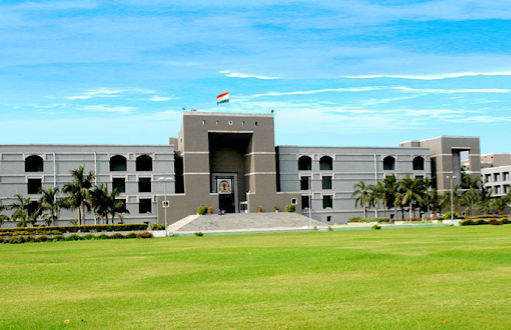
Gujarat High Court has upheld restrictions on burial activities near the historic Bada Hajira tomb, dismissing a second appeal by the heirs of Pirzada Saiyed Bahauddin Kadri.
The court ruled that digging beyond one foot in the protected monument area violates Section 19 of the Ancient Monuments and Archaeological Sites and Remains (AMASR) Act, 1958, and that no customary right to burial was proven.
The dispute centers on land surrounding Bada Hajira (also known as Danteshwar Hajira) in Pratapnagar, Vadodara, home to the tomb of Qutbuddin Muhammad Khan — a Mughal-era figure who served as tutor to Prince Salim (later Emperor Jahangir) — along with his son Naurang Khan and other family members.
Declared a protected monument by the Baroda State as early as 1938, it was later recognised under the central AMASR Act, 1958, due to its national importance and is managed by the Archaeological Survey of India (ASI).
Pirzada Saiyed Bahauddin B. Kadri, who claimed to be the Dharma Guru of the Qadariya sect associated with the site (known as Khanka-ae-Qadariya), filed a civil suit in the 1980s. He sought to declare null and void a February 4, 1986, notice from the Vadodara Collector restraining burial and religious activities.
The plaintiff asserted customary rights to bury family members near the tomb, citing Sections 5(6) and 16 of the AMASR Act, which allow worship and religious observances.The trial court initially decreed in the plaintiff's favour based on oral and some documentary evidence. However, the appellate court reversed this, relying on unexhibited public documents — including revenue entries, notifications, and orders from the former Maharaja of Baroda and ASI — produced by the plaintiff himself.
It set aside the trial court's judgment and dismissed the suit.Challenging this in a second appeal under Section 100 of the Code of Civil Procedure, the plaintiff's counsel argued that the appellate court erred by considering unexhibited documents without formal proof, especially since the state did not lead evidence.
The assistant government pleader (AGP) countered that these were public records referenced in the plaintiff's own pleadings, admissible without exhibition, and that the plaintiff could not disown their implications.
A single judge bench, in its recent ruling held that appellate courts can rely on such documents when produced by the plaintiff. Crucially, Section 19 of the AMASR Act prohibits digging or excavation beyond one foot from the surface in protected areas (with a limited proviso for cultivation).
The court emphasised that the plaintiff failed to prove his status as Dharma Guru or any enforceable customary burial right. It noted the site's protected status predates independence and remains under ASI oversight.
