




Gujarat govt passes UCC bill, second state in India to adopt uniform code
Updated: Mar 25th, 2026


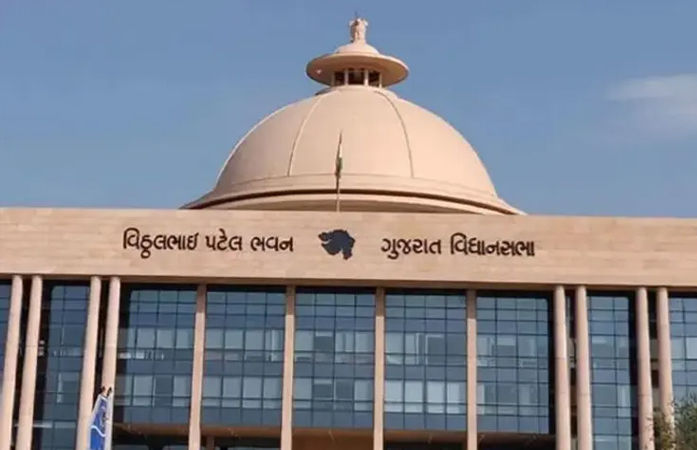
The Gujarat government passed the Uniform Civil Code (UCC) Bill, 2026, in the legislative assembly on Wednesday, aimed at bringing sweeping changes to the legal and social framework.
The proposed legislation, titled ‘Gujarat Bill No 17 of 2026’, had been taken up for detailed discussion in the House. After Uttarakhand, Gujarat becomes the second state to implement a uniform civil code applicable to all citizens.
The bill seeks to establish a common set of laws governing matters such as marriage, divorce, inheritance and live-in relationships across all religions. It proposes mandatory registration of marriages and divorces, while live-in partners would be required to submit a formal declaration to the registrar.
Rules on marriage and divorce in the bill
Marriage registration will be mandatory for all citizens. Failure to register a marriage can attract a penalty of up to ₹10,000.
The bill proposes strict punishment for polygamy, with a provision of up to four years’ imprisonment for individuals entering into multiple marriages.
Divorce rules will be uniform across all religions and communities. Any divorce carried out outside the court will be considered invalid, and those involved may face legal action.
Live-in relationships
Couples in live-in relationships will be required to register their relationship within three months. The provision aims to ensure legal protection and prevent cases of fraud.
Children born out of live-in relationships would be recognised as legitimate and entitled to full legal protection under the proposed law.
Exemption for minority communities
The Chief Minister has clarified that the law will not apply to the traditional practice of cousin marriages in certain minority communities, granting them an exemption in this regard.
The provisions are expected to apply to residents of Gujarat as well as natives of the state living outside its boundaries.
Officials said the legislation aims to bring uniformity in personal laws while maintaining social balance by excluding Scheduled Tribes and certain communities with protected customary rights from its ambit.
The bill is based on the recommendations of a high-level expert committee headed by former Supreme Court judge Ranjana Prakash Desai, which examined legal aspects and public feedback before submitting its report to the government.
According to sources, the ruling party has issued a whip directing all its MLAs to be present during the proceedings to ensure passage of the bill.
Meanwhile, the opposition is expected to have a relatively thin presence in the House, with leaders of the Congress and the Aam Aadmi Party engaged in preparations for the upcoming local elections. However, a heated debate is anticipated over issues of social reform and legal equality, sources added.
