




Gujarat Assembly passes bill to raise working hours from 9 to 10 hours daily , women allowed night shifts
Updated: Feb 17th, 2026


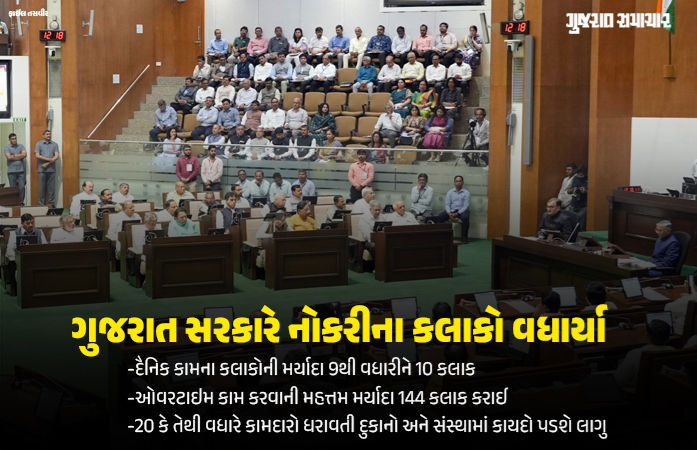
The Gujarat Legislative Assembly unanimously passed the Gujarat Shops and Establishments (Employment Regulation and Conditions of Service) (Amendment) Bill, introducing significant changes to working hours and employment norms in the state. The amendment raises the daily working hours limit from 9 to 10 hours and increases the overtime ceiling from 125 hours to 144 hours over three months.
The bill was introduced in the House by Labour and Employment Minister Kunwarji Bavaliya, after it had earlier been published in the State Gazette. While the legislation was ultimately passed unanimously, the discussion witnessed noisy scenes in the Assembly. MLAs of the Aam Aadmi Party staged a protest inside the House, holding posters and demanding live telecast of the Assembly proceedings.
One of the major amendments relates to the applicability of the Act. Earlier, the law applied to shops and establishments employing 10 or more workers. With the new amendment, it will now apply only to establishments employing 20 or more workers. Shops and institutions with fewer than 20 employees will not be required to register under the Act, but they must submit details online. The government stated that this step is aimed at easing compliance for small traders and start-ups, thereby encouraging business growth.
The amendment increases the daily working hours from 9 to 10 hours. Additionally, the limit for continuous work without a break has been extended from 5 hours to 6 hours. The minister said the move would enhance customer convenience, boost economic activity, and support overall economic development.The maximum permissible overtime has also been revised upward from 125 hours to 144 hours within a three-month period providing greater flexibility to employers and employees.
A significant provision in the amendment allows women employees to work between 9 pm and 6 am in shops and establishments, subject to strict conditions. According to the government, women can be assigned night shifts only with their consent and if the employer ensures adequate facilities and safety measures.
These include provision of rest rooms, separate toilets for women, arrangements to protect their dignity and prevent sexual harassment, as well as safe transportation from the workplace to their residence. The government emphasised that these safeguards are intended to ensure women’s safety, dignity, and security at the workplace while expanding employment opportunities.
The state government said the purpose of the amendment is to improve working conditions, create more job opportunities especially for women and provide a more business-friendly environment. The changes also allow establishments to operate 365 days a year with greater flexibility in opening and closing hours, along with streamlined online registration procedures. According to the Labour Minister, the reform is designed to promote ease of doing business while balancing workers’ welfare and economic growth in the state.
