





FSL experts identify 119 victims of Ahmedabad plane crash in record 72 hrs
Updated: Jun 16th, 2025


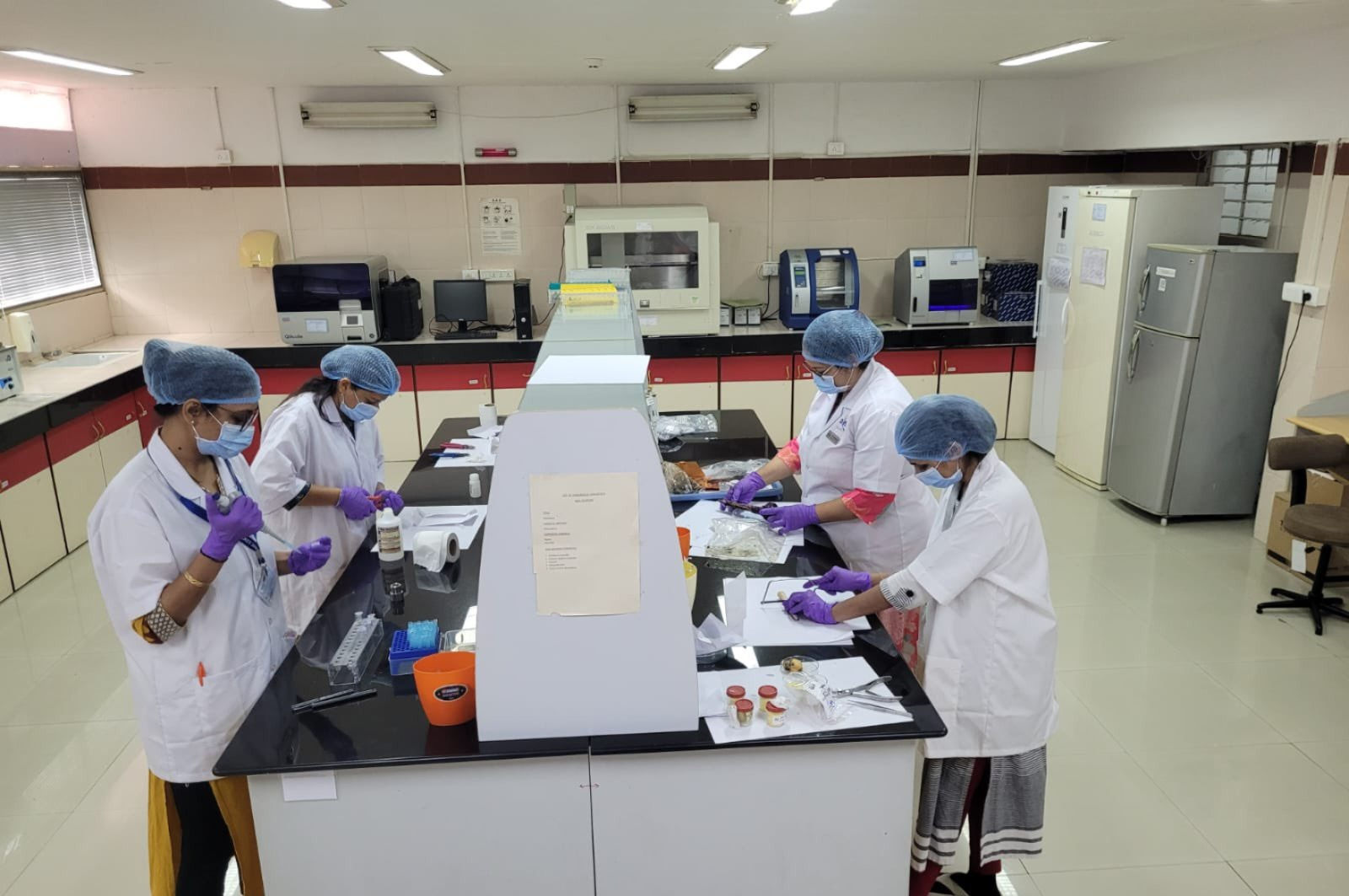
The silent force behind the scenes — a team of dedicated forensic experts worked tirelessly to restore names to the nameless.
Amid the devastation following the tragic crash of Air India Flight 171, while rescue teams pulled mangled remains from the debris, another team was quietly racing against time — the forensic experts at Gujarat’s Forensic Science Laboratory (FSL). Their mission: to identify the deceased through DNA profiling, and bring closure to dozens of grieving families.
In an extraordinary feat of science and commitment, the FSL team managed to identify 119 victims in less than 72 hours — a record-breaking achievement under such catastrophic conditions.
“This wasn’t just a case file for us — it was about restoring dignity and giving grieving families their loved ones back,” according to H P Sanghvi, director, Forensic Science Laboratory.
Round-the-clock operation with 54 DNA experts — 22 of them women
Following the chief minister’s directive, FSL teams from Gandhinagar, Ahmedabad, Vadodara, Surat, and Rajkot were swiftly mobilised and converged at the Gandhinagar lab. Simultaneously, sample collection began at Ahmedabad Civil Hospital where victims’ remains were brought in.
A team of 54 DNA specialists, including 22 women scientists, worked in tandem between the crash site, the hospital, and the laboratory. With hardly a pause for rest, they processed severely damaged remains using complex DNA profiling techniques. Matching samples with those of relatives collected at the hospital, the team carried out the painstaking task under intense emotional and scientific pressure.
Many of these scientists, including young mothers and caregivers, left behind families and personal emergencies to serve on duty. One woman expert, whose mother was due for immediate heart surgery, chose to stay back at the lab and continue her crucial work.
Technology, precision and human empathy
The black box data may reveal the technical causes of the crash, but the swift identification of the deceased was made possible by FSL’s state-of-the-art lab facilities and the unmatched resolve of its team. Experts used advanced equipment to conduct DNA sequencing and profile matching, even as dozens of grief-stricken families waited anxiously.
Each aircraft victim’s sample had to be handled with meticulous care. The sensitivity of the operation was compounded by the fact that many remains were charred or dismembered — making conventional identification impossible.
“We know that behind every sample is a mother, a brother, a child... This is what kept us going,” said a woman forensic expert who has been working without pause for four days.
Scientific mission with a heart
Visiting the lab personally, Gujarat Minister of State for Home Affairs Harsh Sanghavi reviewed the operation and lauded the selfless dedication of the forensic staff. He praised their quiet determination and emphasised the importance of their work in easing the trauma of the families affected by the crash.
Two decades ago, such DNA identification processes would take five to ten days. But thanks to the modernised forensic infrastructure, today the process has been dramatically accelerated — with full identifications made in under three days.
Bringing peace to the grieving
The crash of AI171 will be remembered as one of Gujarat’s darkest days. But the FSL team’s tireless and behind-the-scenes service has brought light to dozens of homes that might otherwise have remained in limbo.
Thanks to their efforts, the mortal remains of loved ones have been swiftly handed over to their families for final rites. Their work has not only set a national benchmark in forensic response but also reaffirmed the vital intersection of science, compassion, and public service.