





Fraudsters now sending fake traffic violation challan on WhatsApp to extort funds
Updated: Jun 30th, 2025


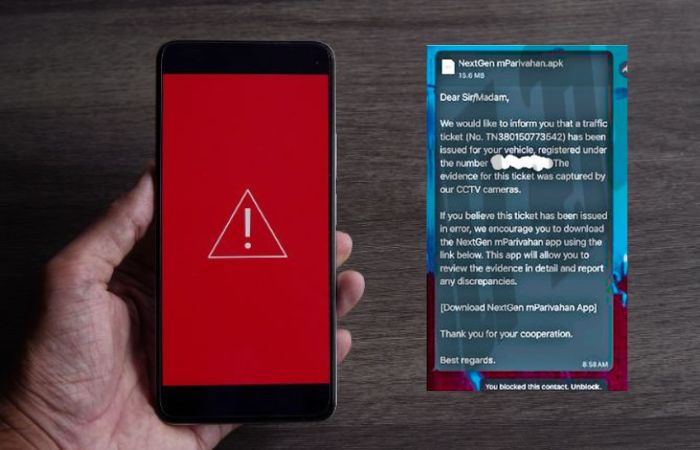
Fake traffic violation e-notices have surfaced on WhatsApp, where links leading to fake websites or apps resembling those of the traffic police or transport departments are sent to citizens to dupe them.
When users enter their banking details on such platforms, scammers hack into their accounts and siphon off money. Even if no violation has occurred, cybercriminals send e-challan notices to trick people. Hence, it is essential to carefully examine and verify the URL before clicking.
In e-challan scams, people first receive a text message or email stating that they have violated traffic rules and must pay a fine. The message includes a link, often with a police-like logo, urging the recipient to pay the fine immediately. The link opens a fake app or site that closely mimics the official e-Parivahan or traffic police portal. Clicking the link may prompt the download of a counterfeit mobile application on your phone.
Fabricated scam
After clicking such links and downloading the app, users are asked to provide sensitive details such as date of birth, PAN card number, Aadhaar, debit/credit card info, and bank account details.
Scammers can commit fraud using this information, including OTPs, CVV codes, and MPINs. If such a message is received, it is important to closely inspect the website’s spelling—small errors can reveal a scam. In addition to the police, banks are also advising people to stay alert, as clicking such links can lead to account hacking and theft of funds.
Advisory issued by central government
The central government has officially issued an advisory warning that links sent via SMS or email, seemingly from traffic authorities, can lead to fake websites resembling official portals. These fraudulent sites or mobile apps are created by cybercriminals to trick people into sharing bank details and to steal money under the pretense of e-challan payments.
How to identify fake links?
Official government websites usually begin with “https://” — this prefix indicates a secured connection, reducing the risk of fraud. Therefore, before accessing any e-challan or government service online, always check if the URL begins with “https://”.
According to cyber security officials, although actions are continuously taken against such fake platforms, scammers often become active again using vehicle registration data. Hence, public vigilance remains crucial.
Gujarat Police issues warning
Many people habitually use Google Search to find helpline numbers. Recently, Gujarat Police also issued an advisory revealing that scammers were placing fake helpline numbers on Google to dupe users. In such cases, the police strongly advise the public to avoid trusting third-party websites, refrain from clicking on unknown links, and verify any application thoroughly before downloading. If any suspicious activity is noticed during online searches, it is advisable to immediately contact the Cyber Helpline at 1930.