




Four days after heavy rains, Banaskantha’s Suigam still reels under water
Updated: Sep 11th, 2025


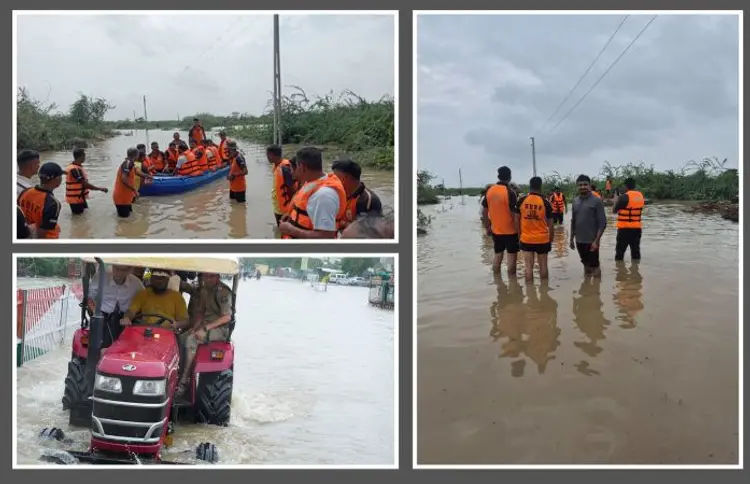
Banaskantha district in Gujarat is battling one of its worst flood situations in recent years, with 19-inch downpour on September 6–7 causing large-scale destruction. Days after the rains, large parts of Suigam, Vav and Tharad talukas have remained submerged under 4 to 8 feet of water, making movement possible only by boats and tractors.
As floodwaters entered homes, residents had to climb to higher grounds, taking shelter in schools, anganwadi centres, government offices and even on rooftops. Daily life has been paralysed, with survivors struggling for drinking water and food.
The agricultural impact has been catastrophic. With several feet of water stagnating for days, standing crops have been completely destroyed, leaving farmers in despair. Cattle losses have mounted, with numerous animals swept away by floodwaters. Carcasses lying in fields, ditches and riverbeds have raised fears of an outbreak of diseases.
In Suigam, water levels have receded only by a foot in over three days, but normal movement is still a far cry. Residents have started clearing soaked belongings and damaged household items, but recovery is slow. Electricity and health teams are working in affected areas, though villagers say drainage arrangements remain inadequate.
Chief Minister Bhupendra Patel is scheduled to conduct an aerial survey of the flood-hit areas on Thursday. Meanwhile, locals accuse the government of being late in response, pointing out that despite the scale of destruction, assessment is yet to happen even after four days.
Banaskantha, heavily dependent on agriculture and livestock, faces extensive losses with both crops and cattle wiped out. The fear of epidemic looms large as carcasses remain uncleared.
