





Farmers underpaid, consumers overcharged as middlemen inflate vegetable prices by 100%
Updated: Jul 19th, 2025


 |
| File photo |
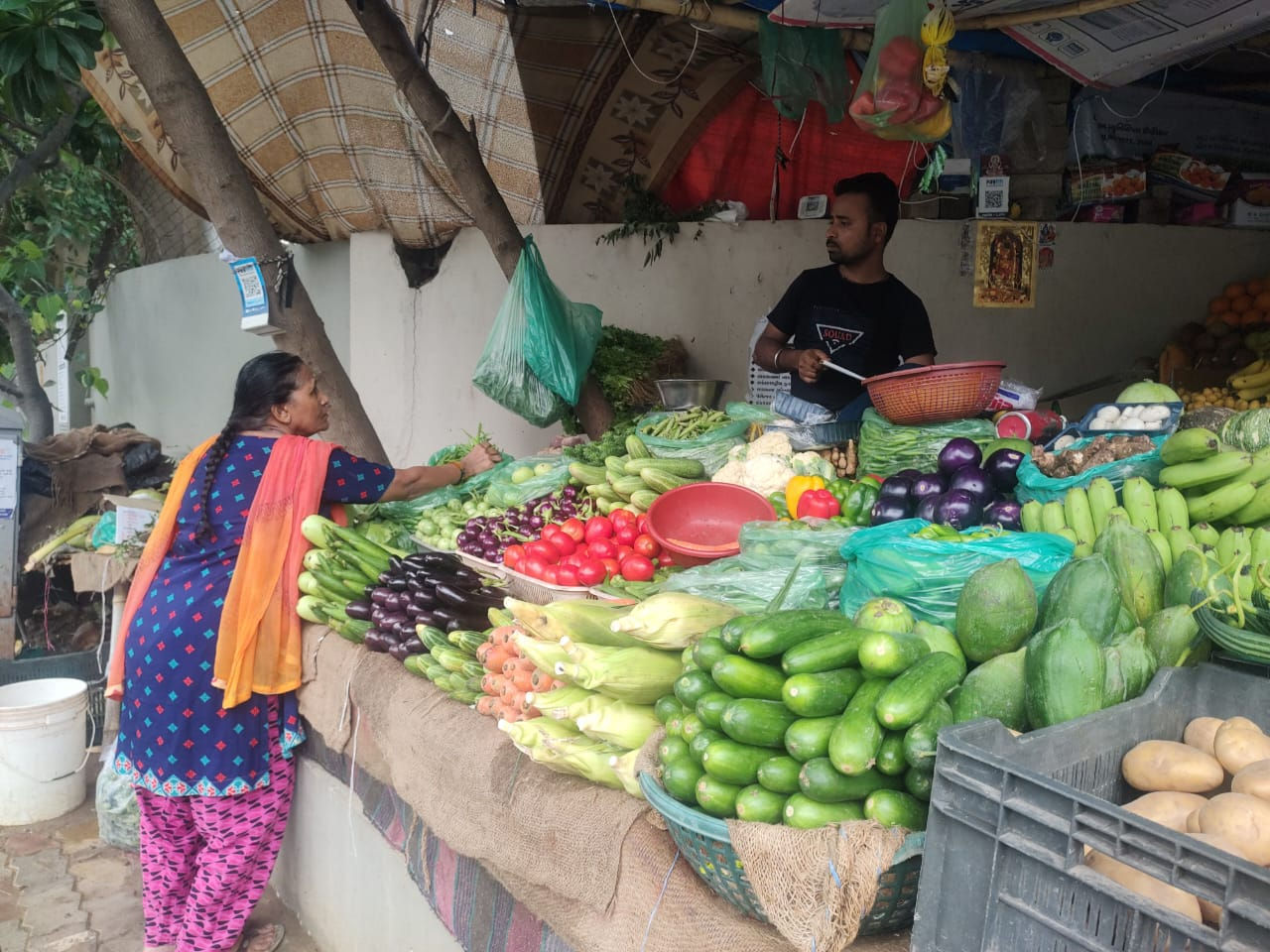
Traders at Agricultural Produce Market Committees (APMCs) in Gujarat are under scrutiny for marking up vegetable prices by 100% to 150% after purchasing them at minimal rates from farmers. This steep hike has not only hurt farmers—who receive little for their produce—but also burdened consumers who rely on vegetables for daily sustenance.
Despite the widespread impact, there is little regulatory action to curb profiteering. Unlike southern states where some vegetables are covered under a Minimum Support Price (MSP) regime, Gujarat has no such provisions. Stakeholders allege this policy gap allows traders to operate like cartels, extracting disproportionate margins at the cost of both producers and the public.
Vegetable prices begin to ease as fresh produce arrives
A brief spell of relief may be on the horizon for consumers, as vegetable prices are expected to drop over the coming days. With rainfall intensity decreasing over the past week, fresh produce from local farms is beginning to reach APMCs, leading to a dip in wholesale prices.
For the past month, intermittent rains had disrupted supply chains and depleted old stocks, allowing traders to hike prices at will. Now, the influx of new crops is beginning to stabilise the market.
For example, cluster beans (chawli), which were selling between ₹50 and ₹200 per kg around July 4, have now come down to ₹20–₹120 per kg with fresh arrivals from Saurashtra. Earlier, supply had largely depended on Nandurbar and Dahod.
Price trends for key vegetables
Several commonly consumed vegetables have seen a noticeable fall in prices:
- Brinjal: Down from ₹20–₹60 to ₹10–₹35 per kg
- Cabbage: Adjusted from ₹2–₹23 to ₹5–₹22 per kg
- Cauliflower: Down from ₹20–₹35 to ₹10–₹22 per kg (sourced from Madhya Pradesh and Maharashtra)
- Okra (bhindi): Down from ₹40–₹70 to ₹20–₹45 per kg
- Tinde: Prices have dropped significantly
- Bottle gourd: Reduced from ₹20–₹50 to ₹10–₹30 per kg due to higher arrivals
- Drumsticks: Down from ₹15–₹95 to ₹10–₹45, with supply from Kutch, Bhuj, and Maharashtra
- Fenugreek (methi) leaves: Earlier ₹30–₹50 per bunch (from Nashik), now ₹20–₹35–40
However, some are bucking the downward price trend:
- Parwal (pointed gourd): Prices have increased slightly from ₹25–₹65 to ₹40–₹55 per kg
- Green chilies: Up from ₹20–₹60 to ₹20–₹85 per kg
Basic kitchen staples such as tomato, onion and potato offer mixed picture:
- Tomatoes: Prices have decreased from ₹20–₹35 to ₹15–₹30 per kg
- Desi potatoes: Down from ₹8–₹12.50 to ₹6–₹12 per kg
- Disana potatoes: Currently stable at ₹7.50–₹17 per kg
- Onions: Remain stable at ₹10–₹17 per kg, with minor fluctuations from the earlier ₹8–₹18 range
Grading system used to justify markups
While wholesale prices at APMCs are falling, end consumers have seen little benefit. Retailers in open markets continue to charge inflated rates, drawing criticism from shoppers and market observers alike.
Vegetables are categorised into four grades, but only 10–15% of the total supply qualifies as top grade. Traders reportedly use this grading system to justify higher prices while still paying farmers low rates for lower-grade produce. As a result, the average market price remains far below what consumers pay.
| Vegetable | Price given to farmers (₹/kg) | Price sold to public (₹/kg) |
|---|---|---|
| Cluster Beans | ₹60 to ₹110 | ₹140 to ₹180 |
| Lady Finger | ₹10 to ₹35 | ₹80 to ₹100 |
| Ridge Gourd | ₹10 to ₹60 | ₹80 to ₹110 |
| Brinjal | ₹20 to ₹45 | ₹60 to ₹90 |
| Bottle Gourd | ₹6 to ₹12 | ₹40 to ₹48 |
| Drumstick | ₹10 to ₹25 | ₹70 to ₹80 |
| Green Beans | ₹10 to ₹16 | ₹70 to ₹90 |
| Cucumber | ₹10 to ₹22 | ₹80 to ₹100 |
| Cowpea | ₹5 to ₹22 | ₹80 to ₹100 |
| Vegetable | Supply on July 5 (Quintals) | Supply on July 18 (Quintals) |
|---|---|---|
| Potato (Desi) | 22,737 | 21,717 |
| Brinjal | 288 | 705 |
| Cauliflower | 13,158 | 13,221 |
| Cucumber | 4,063 | 6,946 |
| Lady Finger | 371 | 435 |
| Cluster Beans | 384 | 484 |
| Ridge Gourd | 1,248 | 1,131 |
| Cowpea | 2,363 | 1,844 |