

Devmogra Dham in the Satpura range to host ‘Janjatiya Gaurav Divas’

Summarized by AI; it may make mistakes. Check important info
Summarized by AI; it may make mistakes. Check important info

As the year celebrates the 150th anniversary of ‘people’s hero’ of the tribal community, Bhagwan Birsa Munda, a sacred temple in Narmada’s Satpura range is gearing up to host ‘Janjatiya Gaurav Divas’ on November 15.
The day will be celebrated to spread awareness about the valour, sacrifice, and cultural heritage of the tribal community to the nation and its citizens.
PM Narendra Modi is also slated to take part in the celebrations at the Yaha Mogi Devmogra Dham in the Satpura range.
Faith and devotion
The temple is a centre of deep faith for the tribal community and carries spiritual significance, it also resembles Nepal’s Pashupatinath Temple from the outside
The temple of Pandori Mata (Yahamogi), the clan deity of the tribal community, is located at Devmogra in Sagbara taluka of Narmada district. In this shrine, the self-manifested Yaha Pandori Devmogra Mata has been enshrined as Kani-Kansari since time immemorial.
Tribal communities from Gujarat, Maharashtra, Madhya Pradesh, and Rajasthan worship Yahamogi Pandori as their clan deity.
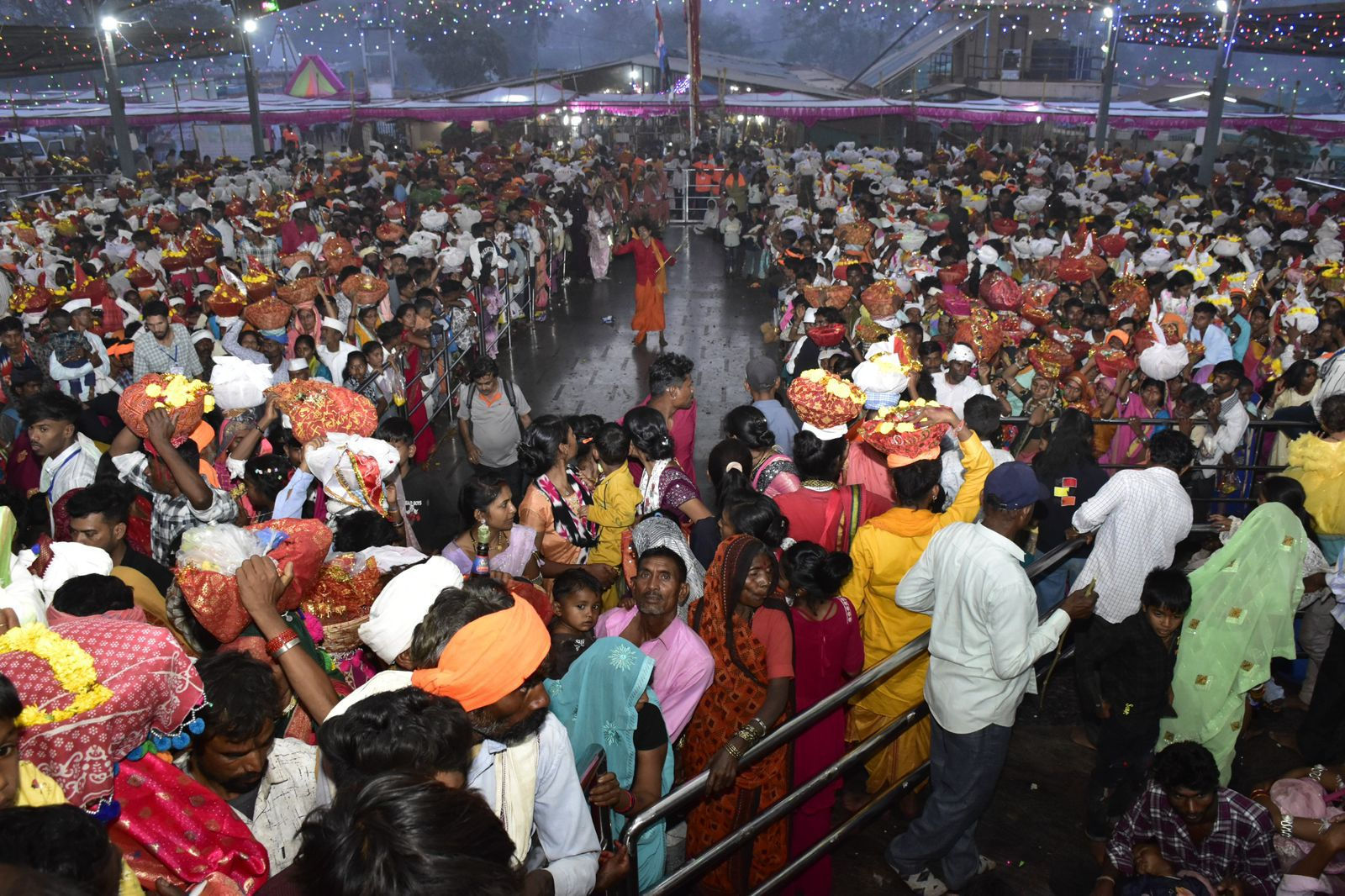
It is believed that thousands of years ago, when this region faced a severe drought, the Goddess herself resided at Devmogra Dham. Due to the devastating drought, food and water became scarce, and animals, birds, and people alike were suffering.
During this challenging period, Gorya Kothar, the guardian of the people in this region, began distributing essential grains. However, as time passed and the grain stores of Gorya Kothar, too, began to empty, his foster daughter Yaha Pandori assumed the form of Kani-Kansari and took charge of distributing food grains. Since then, the grain stores have never run empty.
Lakhs of devotees across generations have visited the temple.
Processions and Mahashivratri Fair
The grand Gadh Yatra (fort procession) is organised every year on Mahashivratri at Devmogra, the abode of Raja Pantha-Vinadev. In this procession, the Goddess is traditionally taken with musical instruments and dance to bathe in a natural spring situated amidst the forests and mountains of the fort.
After worshipping the Goddess, the forecast for the coming year's agriculture, rain, and weather is taken by performing a ritual . Thousands of devotees plan their agricultural activities for the year in advance based on this forecast.
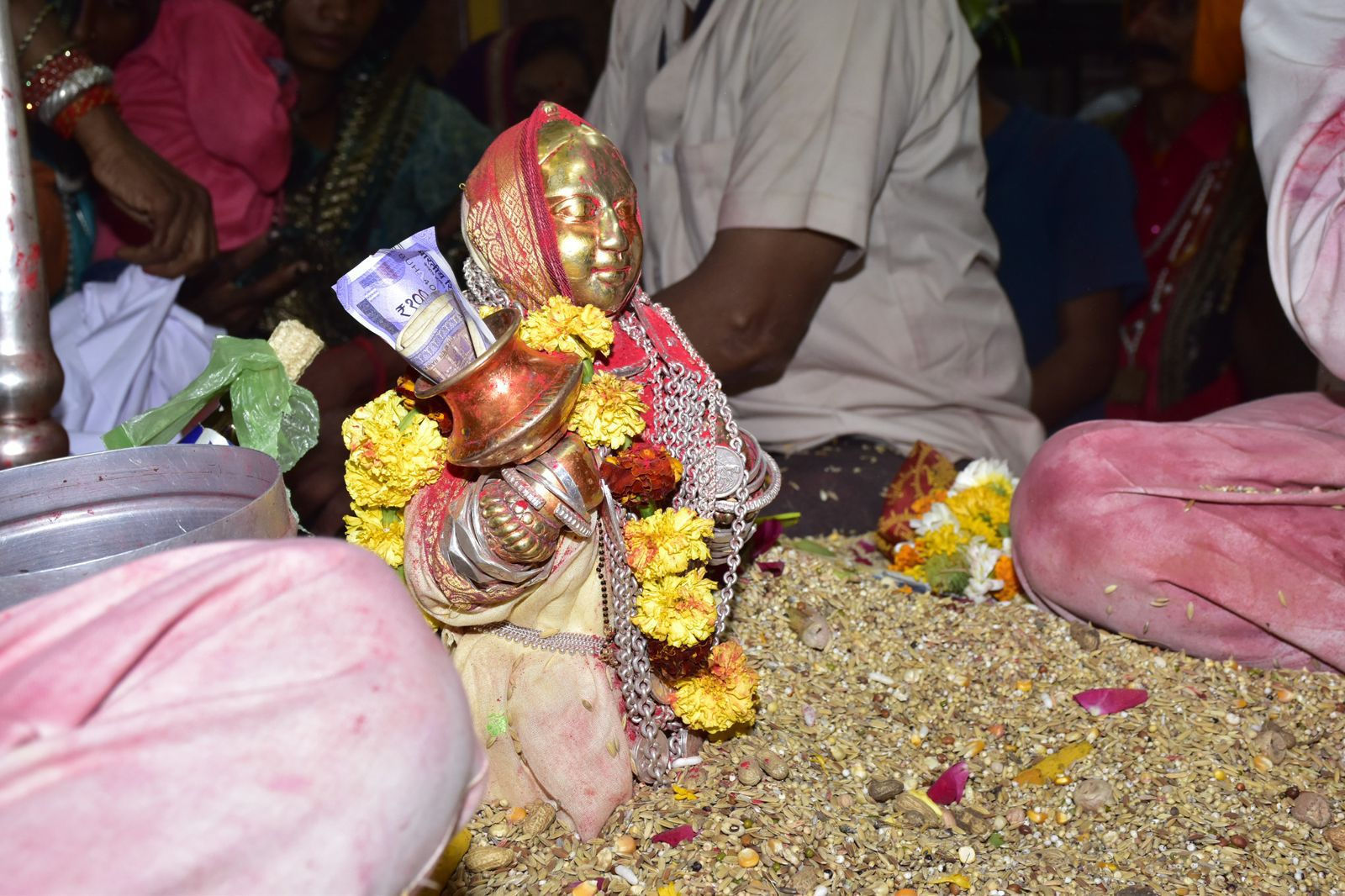
The fair, held for five consecutive days every year from Maha Vad Amas and the day before Mahashivratri, attract millions of devotees.
Tribal traditions and festivities
For thousands of years, the tribal community has upheld a unique tradition, in which they reverently place the new harvest in a bamboo basket. They tie bundles of vegetables and worship items (called 'hiri' or 'hijari') and carry them on their heads. Dressed in vibrant attire, with women adorned in gold and silver jewelry, they set out on the festive Hob Yatra with music and celebration.
After observing a month-long vow and worship, they offer grains to Yaha Pandori Devmogra and only then consume the new harvest.
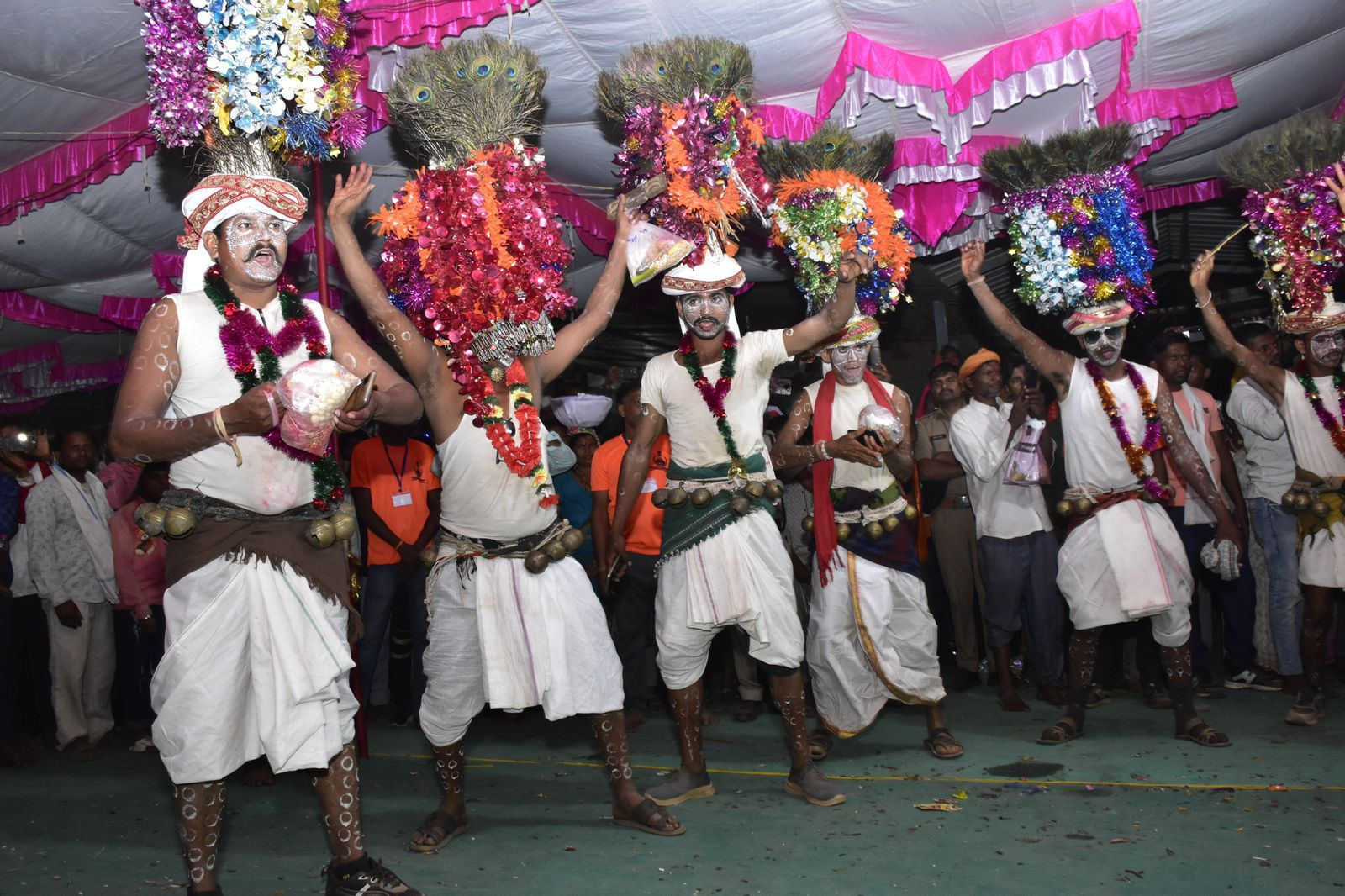
During the Holi-Dhuleti festival, local Gheriyas (folk performers) leave their homes for over a month, going from house to house, forming groups and performing with enthusiasm.
On the eve of Holi, the sacred fire is lit at Holi Chowk, and women, dressed in traditional costumes, join the celebration by singing Lole (folk songs of Holi), dancing to musical instruments, and rejoicing in the festive spirit.


