




Dalits protest in Gujarat’s capital over police misinterpreting SC verdict
Updated: Jul 30th, 2024


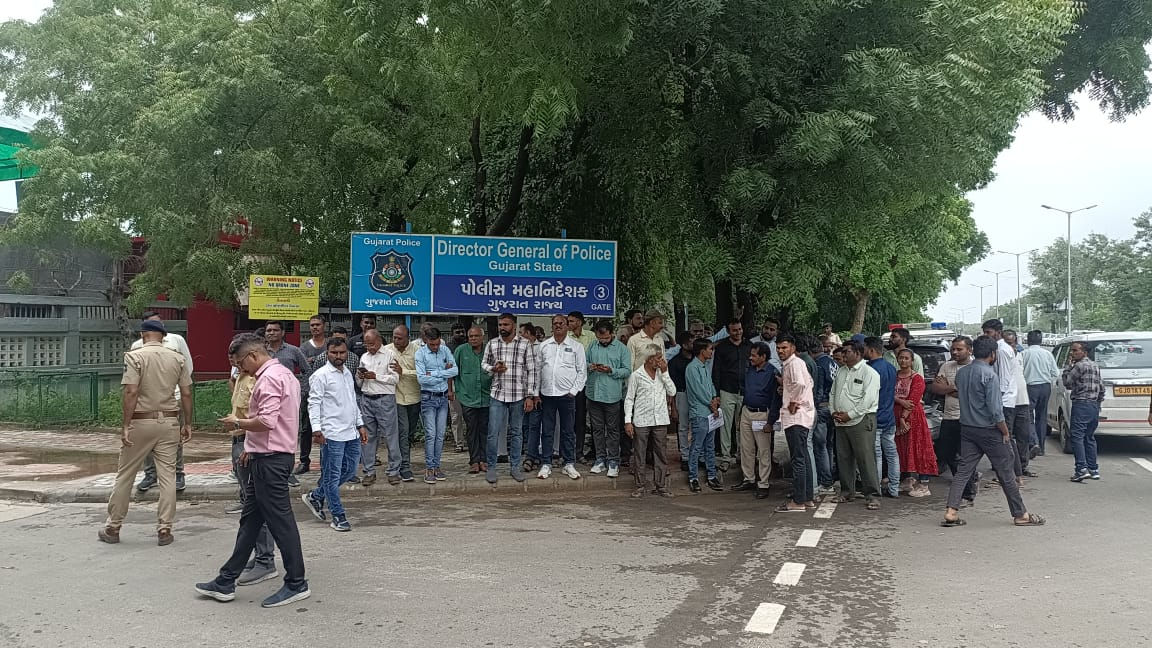
Dalits in Gujarat’s capital Gandhinagar today protested against the police over the misinterpretation of a judgment that allegedly benefits the accused under the Scheduled Caste and Scheduled Tribe (Prevention of Atrocities) Act, 1989.
A delegation gathered at the Director General of Police (DGP) office in Gandhinagar, claiming that the police had misinterpreted the Arnesh Kumar vs State of Bihar judgment, where the power of arrest by the police was questioned.
In an application submitted to the DGP, Dalits said that due to the misinterpretation of this verdict, the police do not make arrests in the crimes reported under the SC/ST (Prevention of Atrocities) Act, despite these offences not allowing anticipatory bails.
This not only benefits the accused but also leads to the complainants facing more atrocities, opined the protestors.
The National Dalit Rights Forum suggested that clear instructions regarding the matter should be conveyed to the police by the DGP.
After a meeting with the DGP, the protestors said that a circular would be issued by the department to its officials in two days. If the department fails to do so, the agitation will continue.
What was Arnesh Kumar vs the State of Bihar verdict of 2014?
The case of Arnesh Kumar vs Bihar curbed the power of police to arrest, where Arnesh Kumar, seeking anticipatory bail, went to the Supreme Court when the lower courts did grant him bail.
Kumar was granted anticipatory bail by the apex court.
In its judgment, the court said, “Law Commissions, Police Commissions and this court in a large number of judgments emphasised the need to maintain a balance between individual liberty and societal order while exercising the power of arrest.”
“Police officers make arrests as they believe that they possess the power to do so. As the arrest curtails freedom, brings humiliation and casts scars forever, we feel differently. We believe that no arrest should be made only because the offence is non-bailable and cognisable and therefore, lawful for the police officers to do so.
“The existence of the power to arrest is one thing, the justification for the exercise of it is quite another. Apart from power to arrest, the police officers must be able to justify the reasons thereof. No arrest can be made in a routine manner on a mere allegation of commission of an offence made against a person,” it said.
The judgment further stated that “it would be prudent and wise for a police officer that no arrest is made without a reasonable satisfaction reached after some investigation as to the genuineness of the allegation”.
