





Bilkis Bano case: Why remission policy applied selectively, SC asks Gujarat HC
The final hearing is underway in the batch of petitions filed against the release of convicts
Updated: Aug 18th, 2023


Updated on Aug 18, 12.13 p.m.
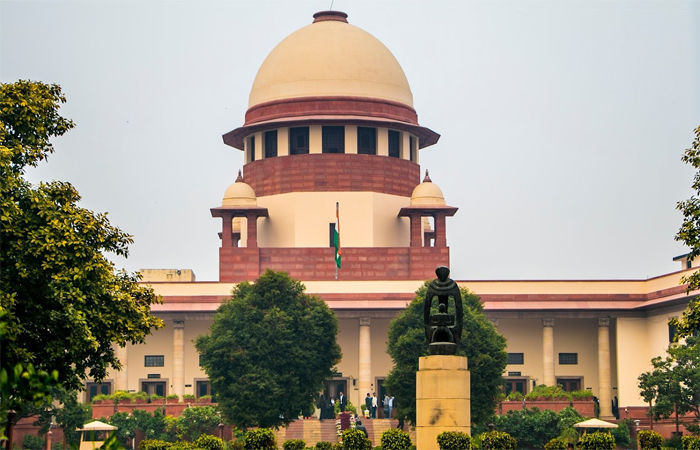
An SC bench comprising Justices B.V. Nagarathna and Ujjal Bhuyan made the observation on Aug 17 while hearing a batch of petitions challenging the remission granted to 11 convicts by the Gujarat government, and asked the reason behind extending the benefit of remission policy “selectively” to these convicts. The bench stated that the opportunity to reform and reintegrate with the society should be given to every prisoner.
The final hearing is underway in the batch of petitions filed against the release of convicts, including the one filed by Bilkis Bano.
The court posted the matter for next hearing on Aug 24 to allow the counsels for centre, Gujarat government, and the convicts to advance their arguments.
The Supreme Court today was told by senior advocate Indira Jaising that the crime committed against Bilkis Bano during the 2002 post-Godhra riots was a “crime against humanity” perpetrated on the basis of religion.
A bench of Justices BV Nagarathna and Ujjal Bhuyan was considering the arguments raised by the PIL litigants who had approached the top court against the remission granted to 11 convicts by the Gujarat government in the case of gang rape of Bilkis Bano and murder of her family members.
The final hearing continued for the fourth consecutive day in the batch of petitions filed against the release of convicts, including the one filed by Bilkis Bano. Jaising, appearing for Trinamool Congress MP Mahua Moitra - who is one of the PIL petitioners, argued that the state government, instead of protecting of protecting rights of women and children, has remitted sentence of the convicts who were involved in multiple murders and gang-rapes.
She argued that the context of 2002 Gujarat riots is a relevant factor weighing against grant of remission to convict as crime committed on Bilkis Bano cannot not be looked at in isolation.
“Cruel, inhuman and degrading treatment”
“Bilkis was five months’ pregnant when she was gang raped,” she told the bench, adding that it was a “cruel, inhuman, and degrading” treatment.
Jaising argued that the remission policy laid down by the state of Gujarat is “no policy” because it overlooks the principles laid by the Supreme Court. Also, the policy fails to categorise the crime on the basis of severity for grant of remission.
Advocate Vrinda Grover further said that the crimes were committed against humanity and attacks were made against the society, not only against an individual. Grover said that the public interest litigations (PILs) challenge the executive discretion and power exercised by the state government by granting remission.
Criminal justice process has ended and attained finality, she added. She pointed out that the convicts did not pay the fines imposed on them and non-payment of fine makes remission itself illegal.
Centre, Guj govt opposes PIL
Earlier, advocate Rishi Malhotra, appearing for a convicts, had opposed the maintainability of public interest litigations, saying that the PIL litigants approached the Supreme Court based on media reports and entertaining their pleas will result in opening of a ‘Pandora’s box’.
The centre, Gujarat government, and convicts have opposed the public interest litigations (PILs) filed by CPI-M leader Subhashini Ali, Trinamool’s Moitra, National Federation of Indian Women, Asma Shafique Shaikh and others, saying that once victim herself has approached the court, others may not be allowed to intervene in a criminal matter.
Additional solicitor general SV Raju, appearing on behalf of the centre, had argued that remission is reduction of sentence and a PIL cannot be entertained on the question of sentence.
“Insofar as the quantum of sentence is concerned, a third party can never have a say,” he said.
The court posted the matter for hearing on Aug 17 to allow counsels for centre, state government and convicts to advance their arguments.
The 11 men convicted in the case were released on Aug 15 last year, after the Gujarat government allowed their release under its remission policy.
The convicts had completed 15 years in jail.
(Source: IANS)
-Edited for style
For more such updates and news on the go, follow us on