





Central agencies probing Ahmedabad plane crash, no role of Gujarat govt: Rushikesh Patel
Updated: Jun 18th, 2025


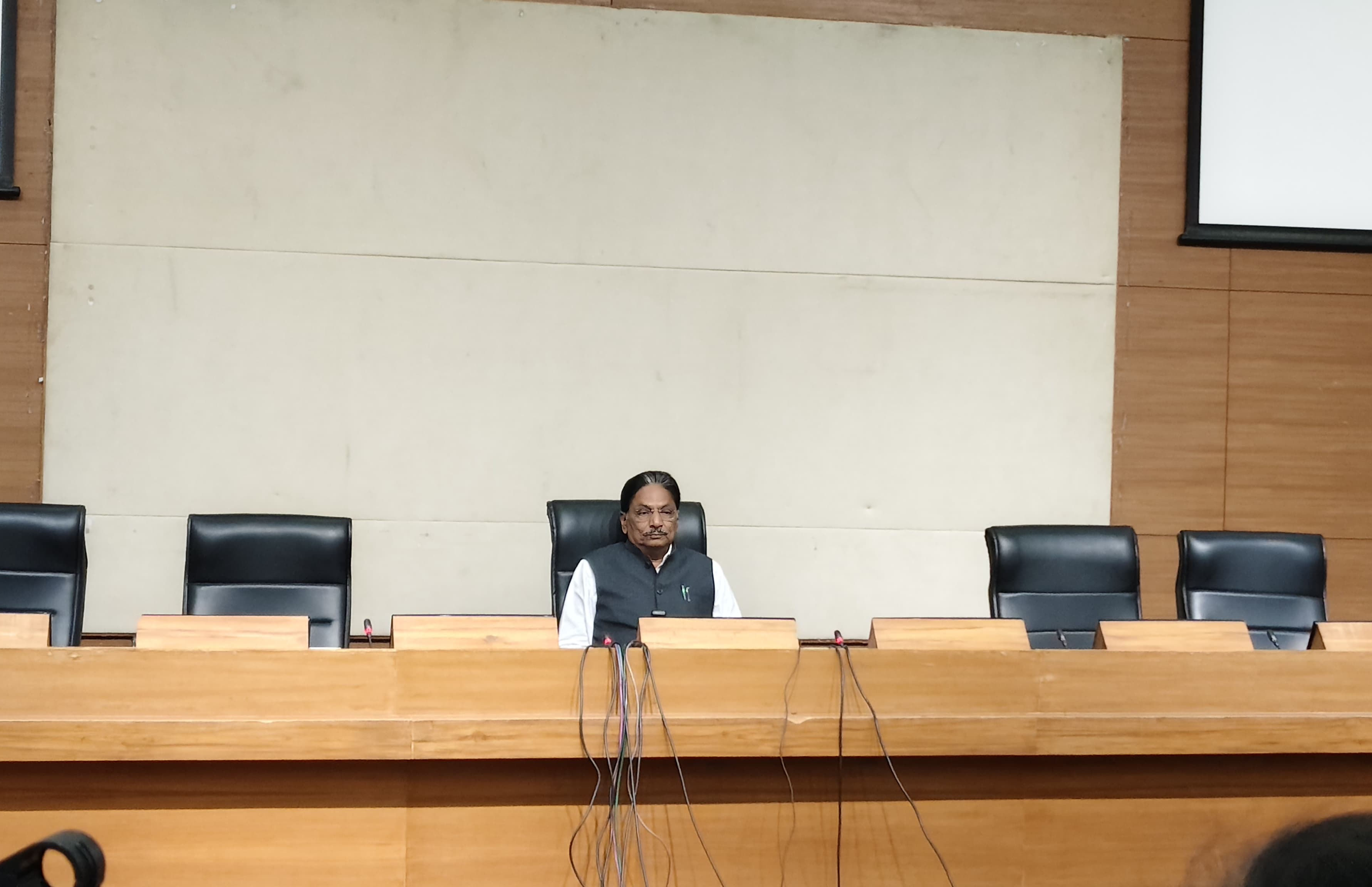
In the aftermath of the plane crash in Ahmedabad, the Gujarat state cabinet today paid tribute to the deceased. State government spokesperson and Health minister Rushikesh Patel briefed the media about the relief operations.
Providing details of the disaster management response, Patel said that senior officials and ministers had promptly reached the crash site and coordinated the relief operations on-ground and at the Civil Hospital.
He further said that central investigative agencies are now actively involved in the investigation, so the state government has no direct role in the probe moving forward.
Those injured and affected in the hostel area, where the aircraft wing struck, were treated within 6 to 7 minutes, and all ICUs at the Civil Hospital were fully equipped and made operational, he added.
Key statistics from the relief operation
139 fire brigade vehicles
670 army personnel
Around 100 ambulances
Over 600 healthcare workers
36 forensic staff
Around 400 units of blood arranged
65 rooms to accommodate families of victims
Head of the Forensic Medicine department at Ahmedabad Civil Hospital Dr Dharmesh Patel said that the state government has established a highly advanced post-mortem and mortuary centre equipped with modern infrastructure and cutting-edge capabilities at the hospital. This facility has a high capacity to preserve a large number of mortal remains for extended periods, while simultaneously enabling forensic investigations and post-mortem procedures.
To preserve mortal remains for extended periods, the centre houses specialised storage rooms with advanced HVAC (Heating, Ventilation, and Air Conditioning) systems. Additionally, the facility is supported by expansive infrastructure, including parking space for over 80 ambulances near the building.
Beyond its core function of post-mortem examinations, the centre also serves as a hub for education and training. A modern observation gallery has been constructed, allowing up to 30 medical students to view live post-mortem procedures in a seated arrangement.
Moreover, a training hall has been developed on the first floor to facilitate post-mortem-related training for professionals from the National Forensic Sciences University (NFSU), Forensic Science Laboratory (FSL), the police department, and even members of the judiciary.
The minister added that both ground and in-flight casualties were treated within 20 hours, and DNA samples were collected. The samples were processed by FSL and NFSU.
He highlighted that, unlike the earlier one-to-one DNA matching method, the new approach of ‘one-to-many’ DNA matching was used to accelerate the identification process.