




Ahmedabad’s pollution crisis: PM10, PM2.5 levels up to 10 times higher than ideal
Updated: Mar 12th, 2026


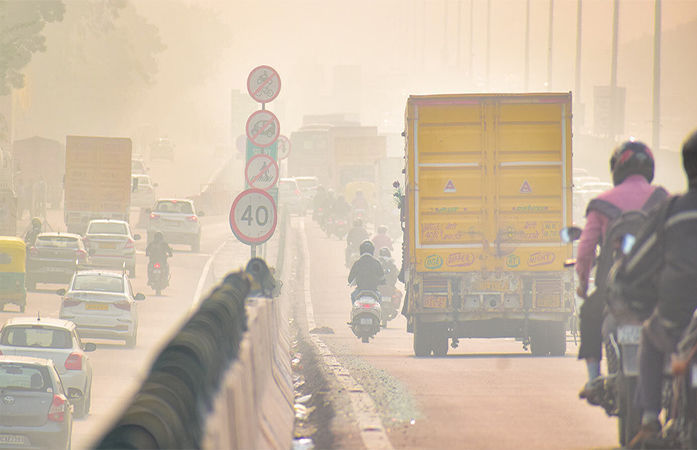
Air pollution in Ahmedabad remains a growing concern, with levels of hazardous particulate matter, PM10 and PM2.5 reported to be up to 10 times higher than recommended levels despite significant spending on pollution control measures.
Data presented in the Gujarat assembly shows that the city’s Air Quality Index (AQI) frequently crosses 150–200, indicating poor air quality even as the government and the Amdavad Municipal Corporation (AMC) have spent crores of rupees on measures aimed at tackling pollution.
As per figures recorded at air quality monitoring stations across the city between October and January, the concentration of PM10 particles ranged from 100 to 150 micrograms per cubic metre, compared with the ideal level of around 15 micrograms per cubic metre.
Similarly, PM2.5 levels were recorded between 46 and 61 micrograms per cubic metre against a recommended level of around five micrograms per cubic metre, far exceeding guidelines set by the World Health Organisation (WHO).
The data indicates that the concentration of these hazardous particles is roughly 10 times higher than the recommended limits, raising concerns about public health.
The figures are shocking considering the government spending more than ₹400 crore across the state over the past two years under the National Clean Air Programme and other initiatives aimed at reducing air pollution.
Reports presented in the Assembly also alleged that in some cases water was sprayed near air quality monitoring stations, which could temporarily reduce pollution readings. This has raised concerns that the actual levels of particulate pollution in certain areas may be significantly higher.
Medical experts warn that fine particulate matter such as PM2.5 can penetrate deep into the lungs and enter the bloodstream while breathing, potentially damaging multiple organs and increasing the risk of serious respiratory and cardiovascular diseases.
Key differences and details
Definition & size: PM10 (coarse dust) consists of particles <10µm in diameter, while PM2.5 (fine dust) consists of particles <2.5µm.
For context, human hair is about 70µm wide.
Health impact:
PM10: Often trapped in the nose and throat, causing throat irritation, coughing, and eye irritation.
PM2.5: Poses higher risks because they can enter the bloodstream, causing serious, long-term health issues like heart disease, chronic bronchitis, asthma attacks, and lung damage.
Sources:
PM10: Road dust, construction debris, agriculture, mold, and pollen.
PM2.5: Vehicle exhaust, power plants, industrial processes, and smoke from burning wood or fires.
Visibility & behaviour: PM10 tends to settle faster on surfaces, whereas PM2.5 can remain suspended in the air for longer periods and travel greater distances.
