




Ahmedabad’s Mankol village keeps a 70-year theatre tradition alive during Navratri
Updated: Sep 28th, 2025


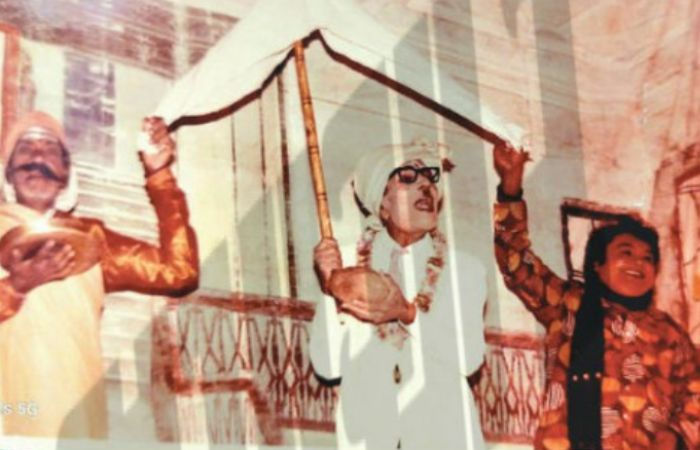
Navratri nights in cities have turned digital, with every road drowned in heavy decibels. However, a remote village of Mankol near Sanand reverberates with a different kind of celebration.
At night, villagers gather in the square with their mats to enjoy the humour, music, and charm of age-old plays including ‘Veer Mangdawalo’, ‘Bhakt Prahlad’, and ‘Em Khamma Mara Veera’. In this era of social media, this tradition is a blessing for families, including women and children.
In Mankol, the tradition of staging five plays during Navratri from the fourth to the ninth night has been alive for 70 years. While other villages across the district are immersed in garba, Mankol celebrates theatre.
Every year, nine members from the Mir community join the local youth to rehearse and perform five plays from the fourth to the ninth Navratri.
Abbasbhai Kasambhai Mir, associated with this age-old practice, said, “We have been connected with Mankol for many years. Alongside Bhavai artists, the village youth present plays such as Veer Mangdawalo, Rankadevi, Putrae Lajavya Parna, Khamma Mara Veer, and Bhakt Prahlad. Our troupe even has an old ‘peti master’ who still plays the traditional foot-pumped harmonium. Another artist, Sureshbhai Mir, said, ‘I come especially from Katosan to perform female roles.’”
Villagers donate grain
Village elder Kismatbhai Gohil said, “For the last 70 years, plays are staged here during Navratri without fail. What’s special is that these plays are pure entertainment. Alongside mythological characters, they also satirise outdated customs in society. Following the age-old barter tradition, most villagers donate grain. The village youth sell this grain, and the proceeds are used for development work.”
Each year, nearly ₹50,000 is collected this way and spent on village development. Renowned theatre artist and researcher Rameshbhai Panchotiya noted, “Across Gujarat, many villages once staged plays during Navratri based on stories of the Goddess. Today, only a handful of villages continue to preserve this tradition.”
