





Ahmedabad plane crash: Probe focuses on possible electrical failure
Updated: Jul 21st, 2025


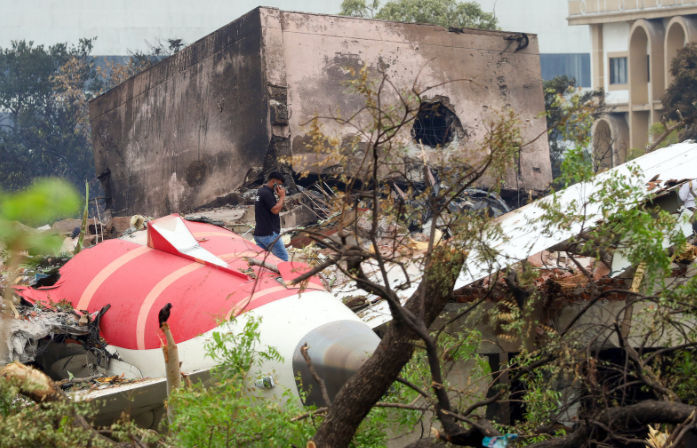 |
Authorities investigating the June 12 crash of Air India flight AI171 in Ahmedabad are examining evidence of a possible electrical malfunction, with preliminary findings pointing to a fault in the aircraft’s power supply system. The crash claimed the lives of all 241 people on board and 19 on the ground when the aircraft hit a medical college hostel shortly after takeoff.
The Aircraft Accident Investigation Bureau (AAIB), which is leading the probe, has dispatched a team to Delhi for further analysis. In Ahmedabad, a dedicated warehouse has been set up near the airport, where each part of the wreckage is being closely inspected. Officials have confirmed that all components of the aircraft have been preserved for detailed examination.
Tail section reveals key clues
One of the most significant observations is that the tail portion of the aircraft remained largely intact. The Auxiliary Power Unit (APU), located in this section and responsible for providing backup power and assisting in engine starts, was also recovered in good condition. Investigators have detected signs of an electrical fire in this area.
A cabin crew member’s body was found in the rear of the plane, strapped into a seat, suggesting that death was due to impact rather than fire. The body was recovered by the fire brigade 72 hours after the crash. Officials noted that many items stored in the rear compartment, including equipment that had been serviced in Ahmedabad, were also found undamaged.
Survivor’s account supports electrical failure theory
Vishwaskumar Ramesh, the sole survivor of the crash, has told investigators that the aircraft experienced repeated electrical failures before the incident. His account has reinforced the working theory that a disruption in the aircraft’s electrical system may have played a central role.
Experts weigh in on power supply and fuel cutoff
Aviation experts suggest that an electrical failure could have led to a fuel supply disruption. One possible scenario being considered is that, during an attempted restart, the pilots toggled the fuel system but were unable to regain control in time. However, specialists also note that in a standard cockpit, one pilot cutting fuel supply by mistake would typically be countered by the other pilot within seconds. This has led some to believe that fuel cutoff alone may not fully explain the crash, and that a wider systems failure may be involved.
Further investigation underway
The AAIB has not yet issued a final report. Its investigation is expected to continue over the coming months, with additional insights likely to emerge as forensic analyses and systems reconstructions progress.
Authorities remain cautious about drawing conclusions, but the focus on the aircraft’s electrical and backup systems indicates a shift toward examining internal malfunctions rather than external or procedural factors.
Also read: