




3 IndusInd Bank officials among 5 held in ₹1.5 cr ‘Chinese investment’ cyber fraud
Updated: Feb 24th, 2026


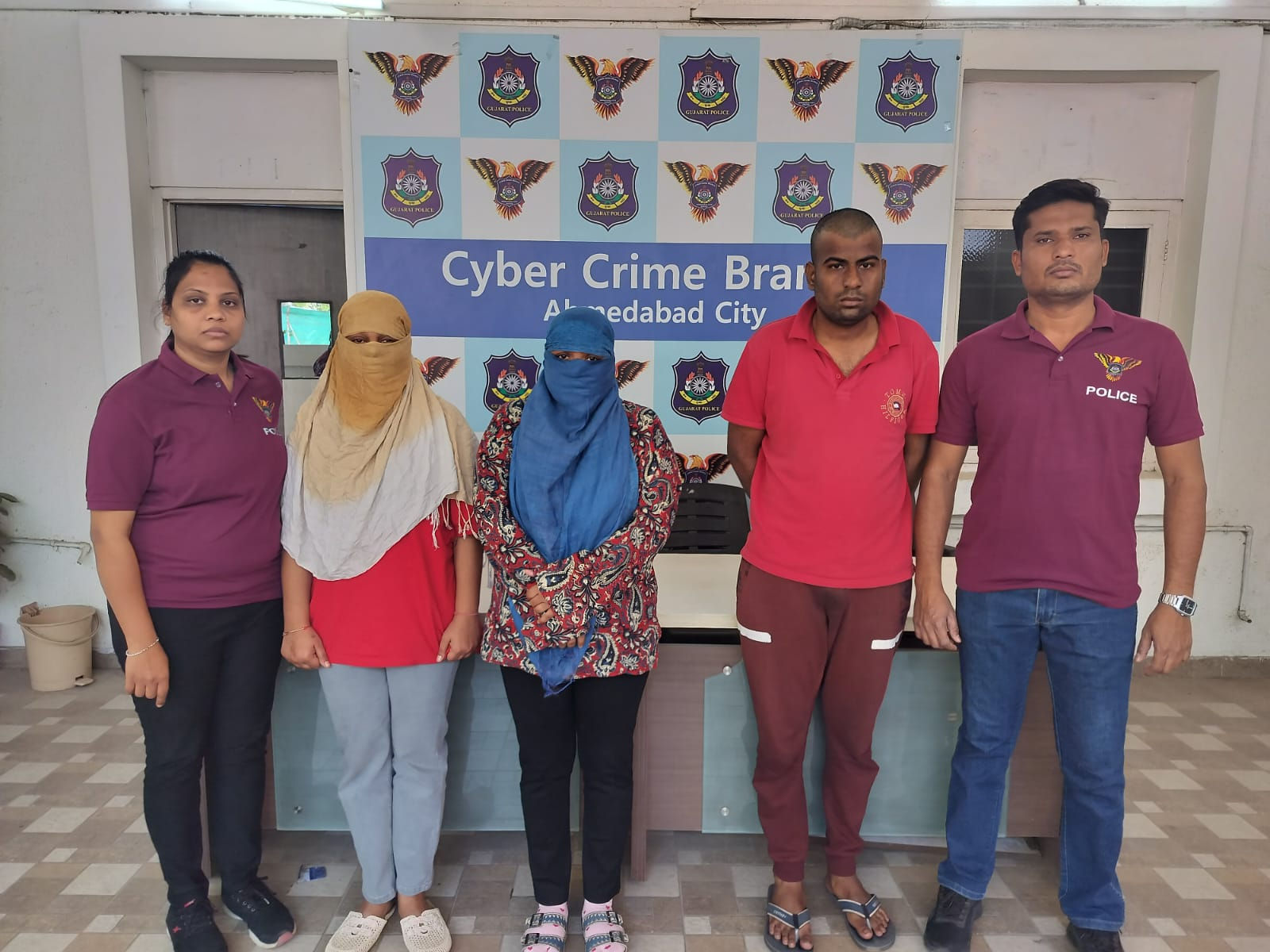
The Cyber Crime Branch of the Ahmedabad City Police has arrested five persons, including three serving officials of IndusInd Bank, for their alleged role in a ₹1.54 crore 'Chinese investment' fraud that duped a city-based complainant through a fake stock market trading application.
Police said the fraud was executed between December 15 and February 4, through WhatsApp and Telegram groups operated under the name '91 BARCLAYS–Stock Market Pioneer'. The victim was lured with promises of high returns on share trading and IPO investments and was persuaded to transfer ₹1.54 crore into multiple bank accounts provided by the accused.
According to the Cyber Crime Branch, the complainant was directed to download a fraudulent application through a link — app.portfoliobulfi.icu — and was subsequently added to social media groups where purported investment tips were shared. Once the funds were transferred, the accused allegedly stopped responding and failed to return the money.
An FIR was registered under sections of the Bharatiya Nyaya Sanhita, along with sections of the Information Technology Act, at the Cyber Crime Police Station, Ahmedabad.
Bank officials among those arrested
The arrested accused have been identified as:
* Hareshbhai Shamjibhai Makwana (44), a resident of Surat, originally from Bhavnagar district;
* Rajubhai Madhubhai Makwana (27), a resident of Bhavnagar;
* Mahesh Rajeshkumar Tarani (24), posted at IndusInd Bank’s Gota branch in Ahmedabad;
* Poojaben Frederick Pariyat, branch manager, IndusInd Bank, New Chandkheda branch;
* Hina Divyam Rajendrabhai Tailor (27), ECBD manager, IndusInd Bank, New Chandkheda branch.
Hareshbhai Makwana was arrested on February 10. The remaining accused were apprehended following coordinated operations in Ahmedabad, Surat and Bhavnagar.
Modus operandi
Investigators said the accused operated in coordination with absconding masterminds identified as Harkishan Dhapa and Aqib alias Kalubhai Lakhepota, who are suspected to have links with a larger overseas syndicate.
As part of the conspiracy, ₹10 lakh from the complainant’s Axis Bank account was first transferred on January 20, to an account in the name of 'Mahadev Enterprise' held by Hareshbhai Makwana at IndusInd Bank. The funds were then layered through multiple accounts.
Police alleged that the bank officials facilitated the fraud by:
* Changing registered mobile numbers and email IDs in the account without the account holder’s presence, in violation of RBI norms;
* Creating sweep fixed deposits through net banking to temporarily park the defrauded funds;
* Assisting in the rapid diversion of money to other accounts.
The siphoned funds were subsequently routed through a payment gateway to a showroom of Tanishq in the Shivranjani area of Ahmedabad, where gold worth approximately ₹10.46 lakh was purchased and allegedly handed over to the absconding co-accused.
Mule accounts and nationwide trail
During the investigation, the Cyber Crime Branch analysed bank records and technical data, including entries on the National Cyber Crime Reporting Portal (NCCRP). Officials said that as many as 414 complaints across different states were found linked to mule accounts associated with the same banking channels and IFSC codes.
Police suspect that the network used multiple “mule accounts” opened in the names of individuals with limited financial backgrounds to route and withdraw the proceeds of crime.
Seizures
The police have seized seven mobile phones, one laptop, seven cheque books, six ATM cards, two demand draft stamps, SIM cards and bank correspondence from the accused. Cash and property collectively valued at ₹1.07 lakh have been attached under panchnama.
Officials said further investigation is under way to trace the remaining funds and to apprehend the absconding masterminds. The role of other bank employees and possible international links is also being examined.
Senior officers of the Cyber Crime Branch stated that the case underscores the increasing sophistication of investment-related cyber frauds and urged citizens to verify the authenticity of trading platforms before transferring funds.
