




Why Ferrari’s first electric car is facing a fierce backlash?
Updated: May 28th, 2026


 |
Ferrari’s long-awaited entry into the electric vehicle market was supposed to mark the beginning of a bold new era for one of the world’s most iconic carmakers. Instead, the unveiling of the Ferrari Luce has triggered a wave of criticism from investors, car enthusiasts, politicians and even former Ferrari executives, exposing the deep tensions surrounding the future of luxury performance cars in the electric age.
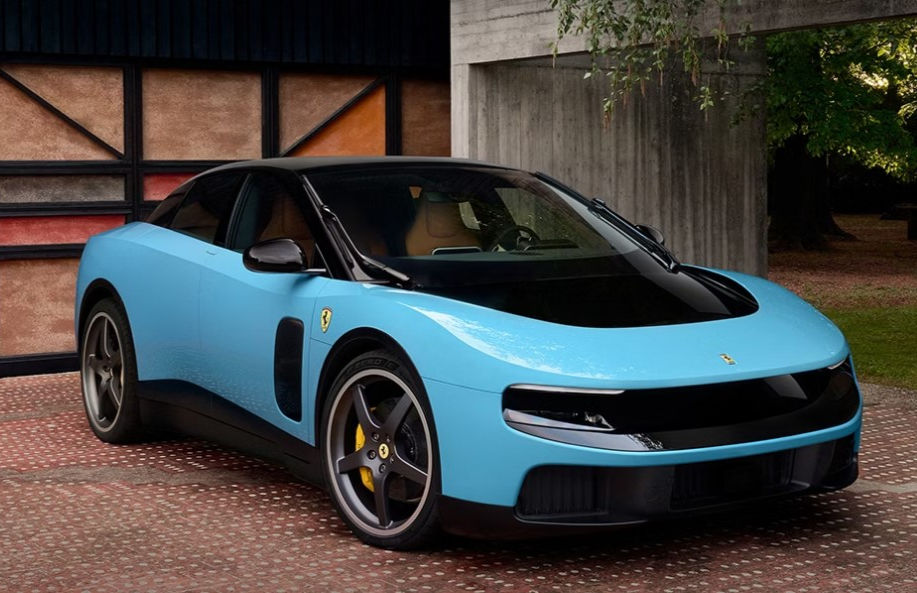
The all-electric Luce, unveiled in Rome this week, represents Ferrari’s most radical shift in decades. Designed in collaboration with former Apple design chief Jony Ive and his LoveFrom studio, the €550,000 ($629,642) car abandons many of the traditional elements that have defined Ferrari for generations.
Unlike Ferrari’s classic low-slung two-door supercars, the Luce is a four-door, five-seat electric grand tourer with a minimalist design language that many critics say looks more like a futuristic family EV than a Ferrari.
Social media users quickly mocked the car, comparing it to everything from a Nissan Leaf and Toyota Prius to a vacuum cleaner and the much-ridiculed Fiat Multipla.
Much of the backlash centres on a simple question: should a Ferrari even be electric?
For decades, Ferrari has sold not just cars but emotion – the roar of a naturally aspirated V8 or V12 engine, the mechanical drama, the racing heritage and the visceral connection between driver and machine. To many enthusiasts, removing the combustion engine strips away the very soul of the brand.
Former Ferrari chairman Luca di Montezemolo emerged as one of the sharpest critics, reportedly suggesting the company should remove the iconic prancing horse badge from the Luce altogether.
Italy’s Deputy Prime Minister and Transport Minister Matteo Salvini also criticised the car’s appearance and questioned whether it still represented Ferrari’s heritage.
The market reaction was equally severe. Ferrari shares fell sharply following the launch, dropping around 8% in Milan amid investor concerns that the company may be moving too far away from the exclusivity and emotional appeal that made it the world’s most valuable luxury carmaker.
Yet the controversy is not only about design or nostalgia. It also reflects growing uncertainty over the future of high-end electric vehicles.
Luxury brands, including Lamborghini, Porsche, Aston Martin and Lotus, have recently slowed or reconsidered aggressive EV plans after weaker-than-expected demand for expensive performance electric cars.
Reports have even suggested Ferrari has delayed its second electric model amid concerns over limited demand in the ultra-luxury EV segment.
Analysts say Ferrari faces a uniquely difficult challenge because its customers are not merely buying transport; they are buying identity, theatre and sound. As Lamborghini chief executive Stephan Winkelmann recently remarked, luxury sports car buyers are purchasing “a dream and not mobility”.
Ferrari, however, insists the Luce is not meant to replace traditional Ferraris but to expand the brand into new markets and attract a younger generation of wealthy buyers, particularly in China and Silicon Valley, where electric vehicles have stronger appeal. Ferrari chief executive Benedetto Vigna has described the car as intentionally “polarising” and said the company expected strong reactions.
Technically, the Luce remains an impressive machine. It reportedly produces more than 1,000 horsepower, accelerates from 0 to 100 km/h in around 2.5 seconds and reaches a top speed above 310 km/h. Ferrari also spent years developing a synthetic acoustic system intended to preserve some emotional connection for drivers despite the absence of a combustion engine.
Some automotive critics have even praised aspects of the car, particularly its interior design and tactile controls, which deliberately move away from touchscreen-heavy cabins seen in many modern EVs.
Still, for many Ferrari loyalists, the Luce symbolises a larger fear, that one of motoring’s purest performance brands is being reshaped by emissions regulations, market pressure and changing consumer tastes.
Whether the backlash fades over time or becomes a defining moment in Ferrari’s history may ultimately depend on whether wealthy buyers embrace the Luce once deliveries begin in 2027.
For now, Ferrari’s electric future appears to have divided the automotive world more sharply than perhaps any car launch in recent years.
