




Government rolls back steep jet fuel price hike within hours, offers relief to airlines
Updated: Apr 4th, 2026


The Indian government has swiftly withdrawn a sharp increase in air turbine fuel (ATF) prices for domestic flights, providing significant relief to airlines amid ongoing tensions in the Middle East and global market volatility.
The rollback comes just hours after ATF prices were doubled on April 1, pushing rates to unprecedented levels. For the first time, jet fuel prices crossed ₹2 lakh per kilolitre, with rates in Delhi rising from ₹96,638 per kilolitre on March 1 to a record ₹2.07 lakh.
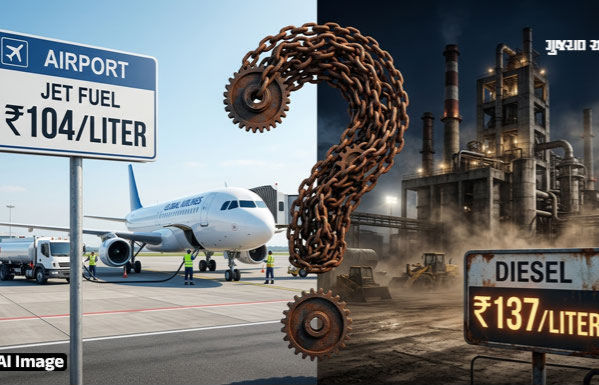
Furthermore, the government reduced ATF prices to around ₹104 per litre (approximately ₹1.04 lakh per kilolitre) with immediate effect, citing concerns over the mounting financial burden on the aviation sector.
Officials said the move was aimed at preventing a sharp rise in airfares, particularly during the peak holiday season, and shielding passengers from higher travel costs.
ATF prices in India have been deregulated since 2001 and are revised monthly based on international benchmarks. The steep hike earlier this month was attributed to global energy disruptions, including instability in West Asia and concerns over supply routes such as the Strait of Hormuz.
According to government sources, public sector oil marketing companies, in consultation with the Ministry of Civil Aviation, opted for a partial and phased increase of around 25% for domestic carriers instead of passing on the full global price surge. However, airlines operating international routes are expected to bear the complete increase in line with global rates.
While the aviation industry has welcomed the decision, it has also sparked criticism over the lack of similar relief in diesel prices, which directly impact the wider public and key sectors such as transport and agriculture.
In recent days, state-owned oil companies, including Indian Oil Corporation Limited and Bharat Petroleum Corporation Limited, have raised industrial diesel prices by over ₹28 per litre, an increase of more than 25%, taking rates to around ₹137.81 per litre.
The surge in diesel prices has led to higher transportation costs for essential commodities such as vegetables, grains and milk, placing additional strain on household budgets.
Critics have questioned the apparent disparity in policy, asking why swift intervention was possible for aviation fuel while no comparable relief has been extended to diesel consumers.
