

₹3,500 Crore Spent, Yet Ahmedabad Drowns: Inside The Municipal Loop Guaranteeing Flooded Streets

Summarized by AI; it may make mistakes. Check important info
Summarized by AI; it may make mistakes. Check important info
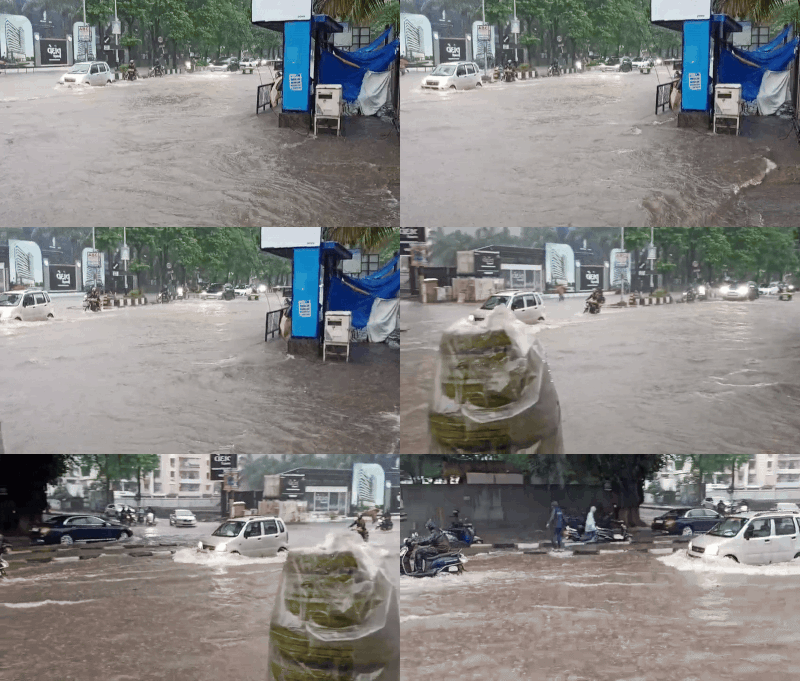
Stand on the edge of the S.G. Highway off-ramp after three hours of heavy downpour, and the math of Gujarat’s financial capital stops making any sense.
Tractors pull stranded hatchbacks through knee-deep brown water. Fire brigade teams roll out orange rubber dinghies in South Bopal. Just two miles away in Thaltej, a fresh stretch of bitumen lies completely collapsed, its jagged edges swallowing a traffic barricade into a seven-foot-deep bhuva.
It is a scene local residents know by heart. What they might not know is that, according to official municipal paperwork signed off just two months ago, this exact intersection was marked as "remediated."
Over the past three years, public funds poured into the city’s underground veins have ballooned to eye-watering figures: over ₹1,000 crore on active stormwater projects, another ₹1,500 crore spent replacing aging sewer lines, and a massive ₹1,003 crore earmarked for the Kharicut Canal box-drain.
Yet every July, the result on the ground remains unchanged. The city doesn't just flood—it drowns in a predictable, bureaucratic loop that transforms public tax money into a endless seasonal exercise.
The Anatomy of a System Designed to Fail
How does a city spend thousands of crores on drainage and still end up wading through water? The answer lies not in how much rain falls from the sky, but in three deeply ingrained institutional habits inside the city's civic administration.
1. The Double-Pay Road Trap
Walk past any ongoing pipe-laying project in April, and you will see the root cause of August's road cave-ins. When a contractor cuts open a main road to lay an ADB-funded drainage line, their contract rarely forces them to rebuild a proper, multi-layered road. They simply dump soil back into the trench, run a heavy roller over it, and slap down a thin layer of asphalt.
There is no time for pneumatic compaction, nor for the soil to settle through a summer drying period. When the first heavy rains hit, water seeps into the loose earth beneath, washing away the sub-grade foundation. The road caves in, and the city issues a fresh emergency tender—hiring a second contractor with local funds to rebuild the asphalt citizens already paid to lay months earlier.
2. Shifting Water, Not Clearing It
In the weeks leading up to the monsoon, ward offices race to hit targets. They install new catchpits, dig localized connections, and drop heavy-duty pumps on high-profile avenues to clear standing water quickly.
It looks good on camera, but mathematically, it solves nothing.
Because the primary trunk lines further down the system remain clogged with construction silt or simply lack the capacity to handle the volume, the water has nowhere to go. The pumps push water out off SG Highway, only for it to back up through small residential drains 300 meters away in Vejalpur or Anandnagar. The civic body hasn't fixed the flood; it has merely relocated it.
3. Delays Without Penalties
Across the city’s outer ring, crucial drainage works routinely run months past their deadlines. Under standard practice, severe delays on critical utility lines should trigger heavy financial penalties on contractors. Instead, extensions are routinely granted, quietly absorbing cost overruns. Roads remain cracked open across consecutive monsoon cycles, leaving the surrounding ground soft, unstable, and vulnerable to total collapse.
The Unbroken Loop
Until the municipal corporation legally binds its road engineering and drainage departments under a unified project authority—where a road cannot be paved until the sub-surface soil density is independently certified, and contractors face a non-negotiable three-year financial liability for any surface collapse—the cycle is locked in.
The rain will stop in September. The mud will dry. Fresh bitumen will be smoothed over the craters, and civic reports will declare the city monsoon-ready once more.
And next July, the citizens of Ahmedabad will pay for the exact same road, for the exact same pipe, all over again.


