

Sabarmati Loco Shed Cuts WDG5 Engine Startup Time From 1 Hour To 4 Seconds; Railways Saves ₹57.8 Lakh

Summarized by AI; it may make mistakes. Check important info
Summarized by AI; it may make mistakes. Check important info

Western Railway’s Ahmedabad Division has achieved a technical breakthrough at its Sabarmati Diesel Loco Shed by introducing two major in-house modifications to the 5,500 HP WDG5 class diesel locomotive.
The innovations have reduced the engine’s startup time from 45 to 60 minutes to just 3 to 4 seconds. The use of indigenous components in place of imported equipment has also resulted in savings of more than ₹57.80 lakh for the Railways.
The initiative supports Indian Railways’ ‘Atmanirbhar Bharat’ drive by reducing dependence on foreign components, cutting downtime and improving the reliability of locomotive operations.
Currently, all seven WDG5 locomotives available with Indian Railways are being operated under the Sabarmati Shed.
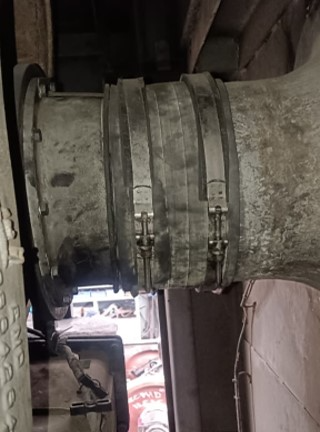
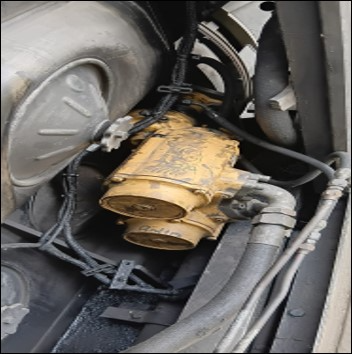
Pneumatic Starting System Replaced With Electric Start
The WDG5 locomotives previously used a pneumatic, air-pressure-based starting system that took between 45 and 60 minutes to start the engine. The system also required expensive imported spare parts, including AC inverters and auxiliary compressors.
Engineers at the Sabarmati shed converted the system to a full electric start by replacing the imported equipment with indigenous components such as an electric starting motor, contactor and battery commonly used in WDG4 and WDP4 engines.
Following the modification, the startup time has been reduced to just 3 to 4 seconds.
Two of the four locomotives that had earlier remained grounded due to the unavailability of spare parts have now been successfully restored to service.
The modification has resulted in savings of ₹20.61 lakh.
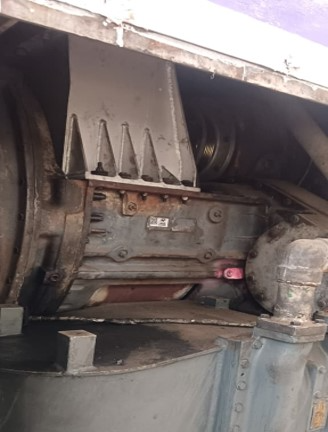
Indigenous Turbocharger And Water Pump Fitted
The second major innovation involved replacing expensive foreign components used in the WDG5 engine.
The turbo-supercharger and water pump of the WDG5 require overhauling every three years. Locomotive number 50003 had remained out of service for a prolonged period because the required spare parts took two to three years to import.
To address the issue, Sabarmati shed engineers successfully fitted the WDG4’s turbo-supercharger, clutch assembly and water pump into the WDG5 locomotive after carrying out the necessary modifications using in-house technology.
The components are readily available at Banaras Locomotive Works (BLW).
Following the modification, load testing was carried out and the locomotive met all operating parameters.
The modification also made a water pump repair kit available for ₹21,275, resulting in estimated savings of approximately ₹37.19 lakh per locomotive.
Key Technical Improvements And Financial Impact
Detail | Previous Status | Current Modified Status |
|---|---|---|
Starting Time | 45 to 60 minutes | 3 to 4 seconds |
Spare Parts Procurement Time | 2 to 3 years (imported) | Immediate (indigenous stock/BLW) |
Savings From Electric Start | — | ₹20,61,515 |
Savings From Turbo/Pump Modification | — | ₹37,19,061 per locomotive |
Total Estimated Savings | — | ₹57,80,576 |
The in-house engineering solutions are expected to accelerate locomotive operations, reduce time lost during engine start-up, lower dependence on imported components and save foreign exchange for the Railways.


