

Know What You Eat: ‘Ask What Ingredients Are Used’, Tukaram Mundhe Tells Consumers

Summarized by AI; it may make mistakes. Check important info
Summarized by AI; it may make mistakes. Check important info

What exactly are you eating? For Maharashtra Food and Drug Administration (FDA) Commissioner Singham Tukaram Munde (though he personally does not like the title), that is the question consumers need to ask before they take the first bite.
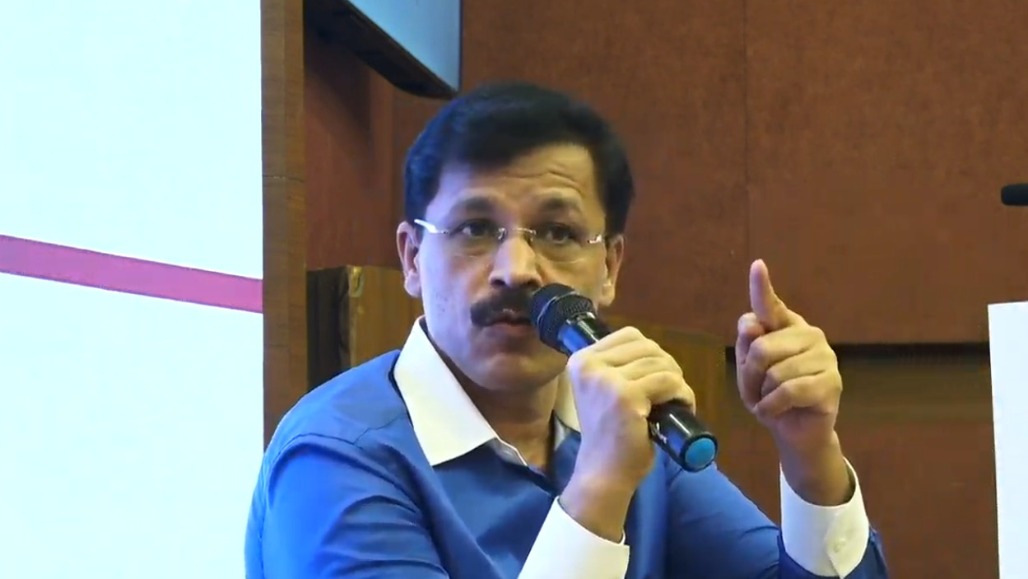
Speaking at a university in Gujarat, Mundhe placed consumer awareness at the centre of the fight against food adulteration, arguing that food safety cannot be left only to regulators, manufacturers or restaurants. Consumers, he said, must become more inquisitive about the food they buy, the ingredients used to prepare it and whether what is being sold to them is actually what it claims to be.
His sharpest example was paneer.
‘If It Is Paneer, First Prove That It Is Paneer’
Mundhe questioned the growing use of the term “analogue paneer”, pointing out that an analogue is, by definition, a substitute.
He questioned the logic of consumers buying something as paneer when the product may not provide what they expect from paneer.
“If you are eating paneer, what you are eating it for is protein. But actually, you are eating fats or trans fats,” he said, asking whether consumers were being ignorant by treating such a substitute as though it were the real product.
For Mundhe, the larger issue goes beyond paneer.
It is about whether consumers are sufficiently curious about what they are putting into their bodies.
His message was simple: before eating something sold as paneer, first establish that it is actually paneer.
“Pehle paneer prove karo, fir khao (first prove that its paneer, then eat),” he said.
Don’t Just Believe What Is Put On Your Plate
Mundhe said the problem was not restricted to one food product or one form of adulteration. He linked it to a broader lack of inquisitiveness among consumers.
People may be good at presenting things, creating narratives and making attractive social media reels, he said, but the more important question is whether they are actually identifying the problem and acting on it.
He said the food industry, like any other industry, operates according to demand and supply. When demand rises and supply cannot keep pace, there is pressure to find substitutes or alternative ways of meeting that demand.
But, he stressed, that cannot mean compromising on what consumers believe they are purchasing.
The responsibility, therefore, does not rest entirely with the food industry. Consumers also need to question what they are being served.
‘Would The Restaurant Owner’s Family Eat There?’
Mundhe offered another test for consumers: if you go to a restaurant, would the family running that restaurant eat the same food there?
He said he had personally seen instances in Mumbai where owners of large restaurants did not eat the food served at their own establishments and instead sourced or imported food for their homes.
“If that is the level,” he said, the question of food quality becomes much larger than an isolated food-industry problem.
The same principle, he suggested, applies across sectors: consumers should not automatically accept something simply because it has been presented to them as safe, genuine or standard.

Food Safety Is Not Just About Raids
Mundhe's emphasis on questioning also comes against the backdrop of stepped-up food safety enforcement in Maharashtra.
He said the state has implemented a 365-day standing order against food adulteration during festivals, rather than treating enforcement as a seasonal exercise. During the Ganesh festival, more than 30,000 kg of suspected food products were seized and destroyed as part of enforcement action.
He also stressed that food safety action cannot stop at a shop or restaurant.
According to Mundhe, enforcement has to cover the entire supply chain — from the source to the plate.
That means looking beyond the retailer to the point where ingredients are sourced, processed, transported and eventually served to the consumer.
Food safety, he said, is not merely a question of whether a business has complied with a legal requirement. It is directly connected with public health.
From Source To Plate, The Entire Chain Matters
Mundhe said the focus on adulteration should therefore not be limited to catching a retailer after a questionable product has already reached the consumer.
The objective has to be to identify where the problem begins and ensure that safety standards are maintained throughout the chain.
That approach also places greater importance on consumers knowing what they are buying.
The question is no longer simply whether a food item looks attractive, tastes good or is being sold at a popular outlet. It is whether it is safe, genuine and made from the ingredients the consumer expects.
‘Eat Right Food’ Does Not Mean Just Tasty Food
Mundhe also urged people to rethink what they mean by “right food”.
Right food, he clarified, does not simply mean food that is tasty, oily or spicy.
“It means standard and safe food,” he said.
He urged people to cut down on foods high in sugar and oil and avoid artificially coloured food. His warning was particularly blunt when discussing coloured food, saying consumers should be cautious because excessive or inappropriate colouring can indicate the presence of chemicals.
His broader advice was: avoid the wrong food and ask for the right food.
The message also extends to the growing consumption of processed and high-fat, high-sugar and high-salt foods.
Junk Food Near Schools Under Scrutiny
Mundhe has also pushed for stricter controls on food available to children. Maharashtra's FDA has prohibited the sale, advertising and free distribution of high-fat, sugar and salt (HFSS) foods within 50 metres of schools. The restrictions cover products such as chips, sugary drinks and other processed or packaged foods.
The measures also require food suppliers operating in schools to comply with food-safety licensing requirements, while schools have been directed towards healthier food choices.
The emphasis is therefore not only on removing unsafe food but also on changing the food environment in which children develop eating habits.
‘If An FDA Commissioner Has To Ask For Water...’
Mundhe used even something as basic as drinking water to underline the importance of asking questions.
“If an FDA commissioner has to ask for normal water, what chance does a common citizen have?” he asked.
He pointed to situations in which customers may simply accept being charged ₹100 or ₹200 for a bottle of water because they did not question what was being provided.
For him, asking questions is not about being difficult or confrontational.
It is a mindset.
Whether a person is an officer, journalist, student or customer, he said, stopping questions allows a system to take people for granted.
Online Food, Cloud Kitchens And Dark Stores Also Need Regulation
Mundhe said the changing food economy also requires regulations to keep pace with emerging businesses.
Online food delivery platforms, cloud kitchens and dark stores are increasingly becoming part of how people buy and consume food. He called for regulatory mechanisms that cover these newer models rather than leaving gaps simply because food is being sold through a digital platform.
Maharashtra has also launched a dedicated mechanism for consumers to lodge complaints relating to online food, he said, with arrangements for resolving such complaints.
The underlying principle remains the same: whether food is bought from a roadside outlet, restaurant, cloud kitchen or through an app, the consumer should not have to surrender the right to safe and standard food.

‘Why’ Is The First Line Of Food Safety
For Mundhe, asking “why” is ultimately the starting point.
Why is this being sold as paneer?
What ingredients have been used?
Is this food safe?
Does the restaurant itself meet the standards it expects customers to accept?
Is the product being sold legally and honestly?
And if something appears wrong, who is responsible for questioning it?
He argued that remaining silent also has a cost.
“I prefer to ask why rather than to remain silent,” Mundhe said.
That philosophy, he suggested, is particularly relevant to food because consumers make decisions about what to eat every day, often without knowing what lies behind the label, advertisement or presentation.
‘Avoid Wrong Food, Ask For Right Food’
Mundhe's message to consumers was ultimately less about fear and more about awareness.
Do not accept food merely because it is labelled, advertised or presented as something. Know what you are eating. Ask what ingredients have been used. Question the quality. Demand compliance.
Because food safety does not begin only when an inspector enters a restaurant or a laboratory tests a sample.
It begins with a consumer asking a basic question before eating: What exactly is this?
When asked about the possibility of entering politics in the future, Mundhe did not look ahead. “I always live in the present,” he said, adding that he is currently a public servant and is focused on carrying out the role expected of him and contributing to reducing India's disease burden and helping create a healthier society.


