

First In Indian Railways: Ahmedabad-Mumbai Bullet Train Corridor Gets ‘Swing-Nose’ Crossings For Safer 320 Kmph Travel

Summarized by AI; it may make mistakes. Check important info
Summarized by AI; it may make mistakes. Check important info

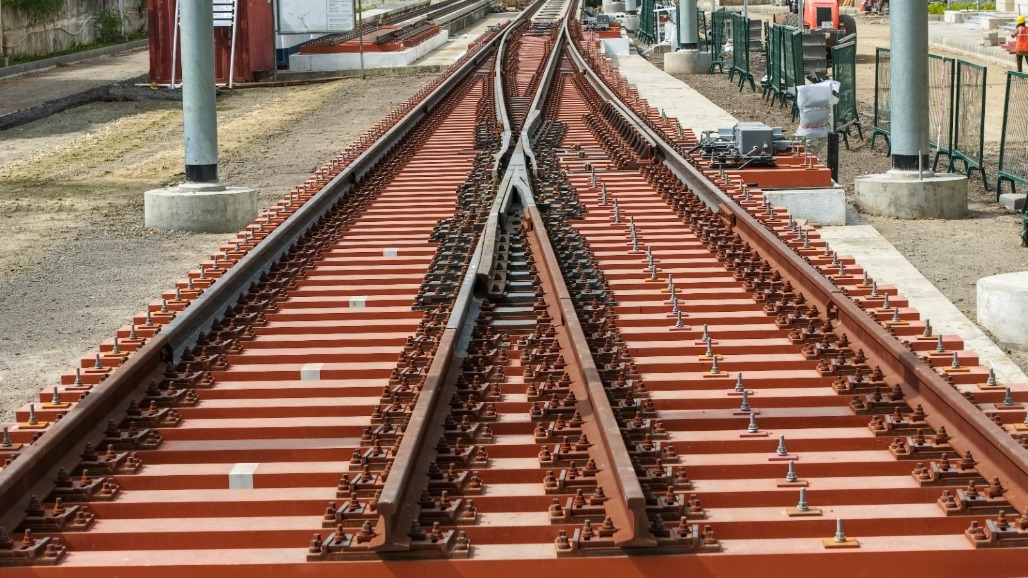
The Ahmedabad-Mumbai Bullet Train Corridor is introducing movable crossings, also known as ‘swing-nose crossings’, for the first time in the Indian Railways network. Equipped with dual point machines, the advanced turnouts are designed to support safe, smooth and low-noise train operations at speeds of up to 320 kmph.
Why Movable Crossings Are Needed
Conventional fixed crossings on regular railway lines have a fixed gap, known as the crossing nose gap, between the rails. At speeds above 250-300 kmph, wheels passing over this gap can generate significant dynamic impact forces.
This can result in increased vibration and noise, greater wheel-rail wear and a risk of flange climbing.
The movable crossing system addresses this by physically moving the crossing nose in alignment with the switch rail. This creates a continuous, gap-free rail surface for train wheels as they pass through the turnout.
Smoother And Quieter Travel
The new system is expected to offer several benefits for both passengers and trains:
- Smoother travel: The continuous rail path reduces dynamic impact as trains pass through turnouts.
- Less noise and vibration: Reduced impact is expected to make the journey more comfortable for passengers.
- Reduced wear: Lower wheel and rail wear can increase the service life of tracks and rolling stock and make maintenance easier.
- Enhanced safety: The system is designed to minimise the risk of wheel derailment during high-speed operations.
How The Dual Point Machine System Works
Each turnout will have two independent point machines. One moves the switch rail into the required position and locks it, while the other moves the movable crossing nose and secures it in place.
Both machines operate simultaneously after receiving a single command from the signalling interlocking system.
The train is given a green signal to proceed only after electronic confirmation that the rails on both sides are correctly positioned and locked.
Multi-Layered Safety System For 320 Kmph Operations
The system has been developed to handle the lateral forces generated at speeds of up to 320 kmph, along with varying Indian weather and temperature conditions.
Independent and redundant detection circuits continuously monitor the position and mechanical locking of both the switch rail and movable crossing.
This means even a minor positioning error or potential failure can be detected before a train is allowed to proceed.


