

Ahmedabad’s ‘Level-Crossing-Free’ Dream Hits a Roadblock: 9 Railway Crossings, No Room for Bridges

Summarized by AI; it may make mistakes. Check important info
Summarized by AI; it may make mistakes. Check important info

Ahmedabad’s plan to become free of railway level crossings faces a major hurdle, with space constraints and infrastructure clashes making bridge construction difficult at nine locations across the city.
The Railways has proposed overbridges or underbridges to ease traffic congestion, reduce waiting times when railway gates close and improve safety. However, narrow Town Planning (TP) roads, underground water and sewage pipelines, and overhead Metro infrastructure have complicated the projects, with the Ahmedabad Municipal Corporation (AMC) expressing reservations about construction at several locations.
While proposals at most crossings remain stalled, the Railways’ Gati Shakti department has initiated the process for overbridges at the busy Maninagar and Vatva-Vinzol crossings on the Ahmedabad-Vadodara section.
Nine Crossings, One Major Question: Where Is the Space?
The Railways has submitted proposals to the AMC and other concerned authorities for bridges at multiple level crossings. However, civic officials have pointed to a fundamental problem: there is not enough space in several areas to build the approach roads needed to connect an overbridge to the existing road network.
Underground utility lines pose another obstacle to underbridge construction, while the Metro corridor running overhead makes overbridge construction difficult at some locations.
Railway officials have indicated that the process can move forward once the relevant authorities respond to the proposals and grant the necessary approvals.
Until then, motorists continue to face delays at crossings where railway gates must close to allow trains to pass.
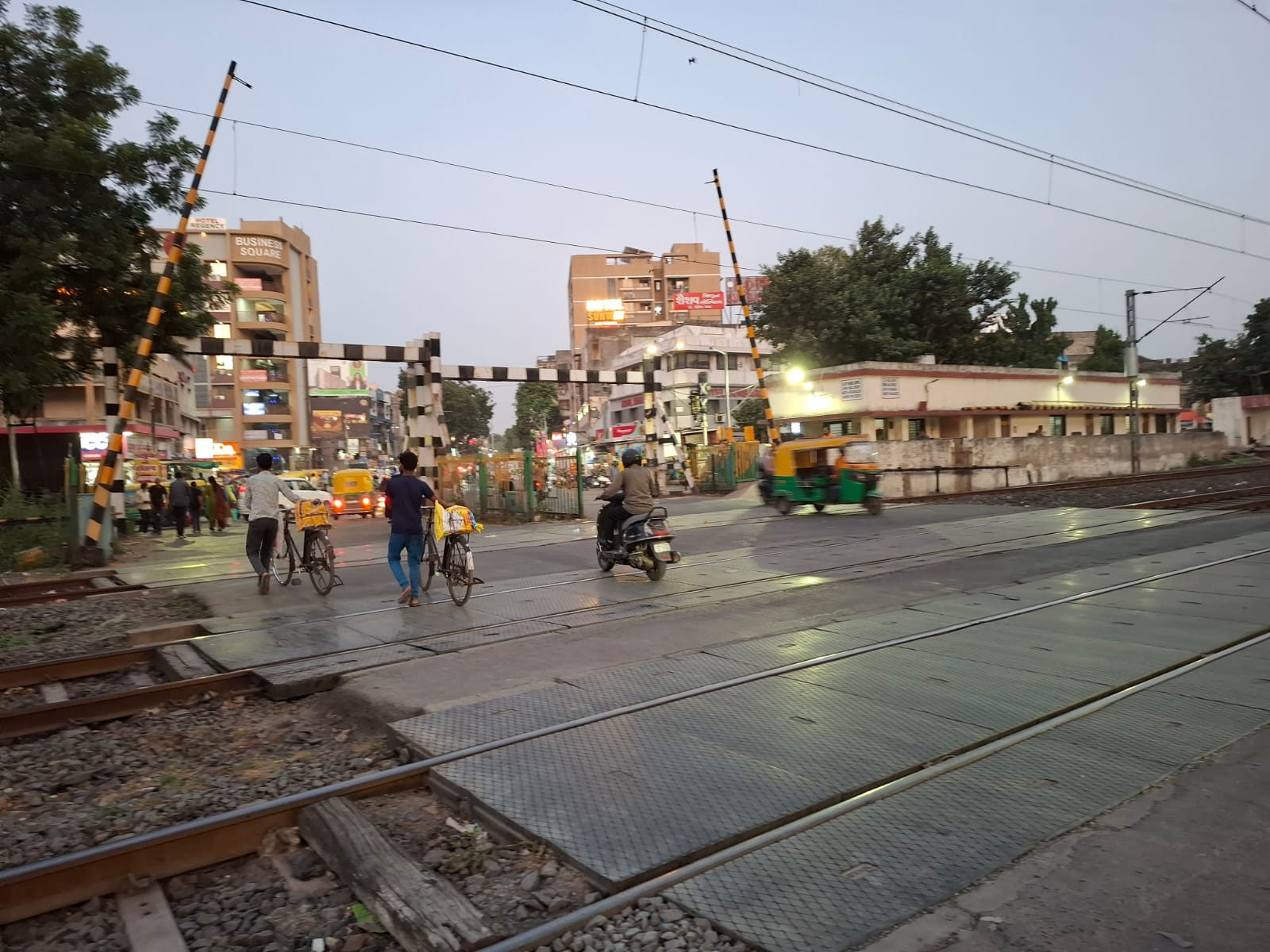
Maninagar, Vatva-Vinzol: Busy Crossings, Difficult Construction
The LC-308 Maninagar crossing and LC-305 Vatva-Vinzol crossing, both on the Ahmedabad-Vadodara railway section, experience heavy movement of trains and road traffic.
The frequent closure of railway gates causes motorists to wait, strengthening the case for grade-separated crossings. Yet, narrow roads and insufficient space have emerged as major challenges for bridge construction.
The AMC has flagged difficulties at these locations, but the Railways’ Gati Shakti department has initiated the process for overbridges at both crossings.
The proposals could move forward if the outstanding issues are resolved and the required approvals are secured.
Asarwa and Naroda Proposals Hit Roadblocks
Plans for bridges at Asarwa and Naroda have also failed to make progress.
At LC-1 Asarwa, on the Ahmedabad-Himmatnagar railway section, the Railways proposed an overbridge. The AMC, however, pointed out that the TP road is too narrow to accommodate the approach road required for the structure. It consequently recommended maintaining the existing situation.
At LC-10 Naroda GIDC, the proposal encountered a different obstacle: the GIDC did not accept the plan, preventing the project from advancing.
Both cases underline how bridge construction depends not only on railway planning but also on available road space and coordination with the relevant agencies.
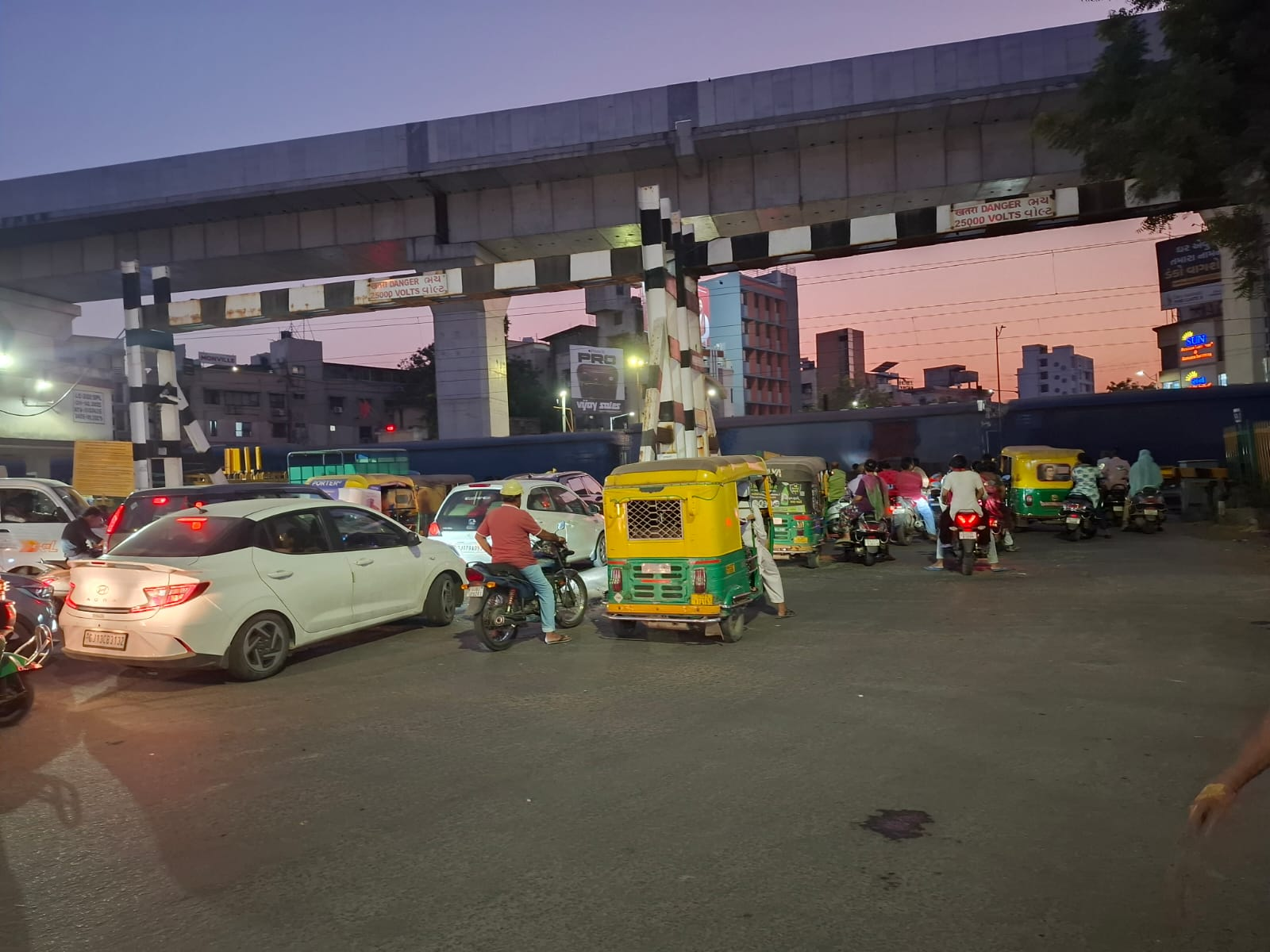
Metro Corridor and Underground Pipelines Complicate Five More Crossings
Five crossings on the Sabarmati-Botad railway section are also facing construction difficulties. They are:
- LC-8 Vijaynagar
- LC-9 Sanghvi High School
- LC-10 Naranpura
- LC-12 Navrangpura
- LC-18 Bhudarpura
The Railways has submitted proposals for overbridges or underbridges at these locations, but the projects have not progressed amid a lack of adequate responses from the concerned authorities.
Underbridges are difficult to construct because of narrow roads and extensive underground utility networks, including water and sewage pipelines. Overbridges, meanwhile, face challenges because of the overhead Metro corridor.
The combination of these constraints has left planners with limited options for eliminating the crossings.
Can Ahmedabad Become Level-Crossing Free?
The objective of eliminating railway level crossings is to reduce traffic disruption, save motorists’ time and improve safety. But Ahmedabad’s experience shows that the plan faces significant practical hurdles in densely built-up urban areas.
The Railways has begun the process for overbridges at Maninagar and Vatva-Vinzol, while proposals at the other locations require responses, coordination and approvals from the relevant authorities.
For motorists who regularly wait at closed railway gates, the immediate question remains unresolved: how will the city remove these bottlenecks when there is little room to build the infrastructure intended to replace them?


